I’ve been thinking about U.S. soccer today for obvious reasons. The World Cup is here, the U.S. is playing on home soil, and for anyone who has watched the sport’s slow, uneven, sometimes awkward rise in America, this moment feels bigger than a match.
It also brings me back to a very specific period in my own career.
I spent a long time at Nike. I was not the person leading Nike Football’s global strategy, and I do not want to pretend otherwise. But I was close enough to feel the energy around that work. I saw how the company studied categories. I saw how people talked about incumbents. I saw how seriously Nike took culture, youth behavior, product, athletes, retail, film, design, and timing. The work was never just “make a great ad.” At its best, it was a full-system question: how do we make people feel something different about a sport, a product, a team, a moment, or themselves?
That period of Nike Football, roughly from the mid-2000s through the 2010 World Cup, is still one of the best challenger-brand case studies I know.
Adidas owned the tournament.
Nike went after the imagination.
When the Leader Defines the Rules, Change What Matters
At the time, adidas had the institutional high ground in football. They had the deeper heritage. They had the official FIFA relationship. They had the match balls. They had the tournament infrastructure. In much of the world, they had the mental shelf space that comes from being there first and being there forever.
Nike could have tried to win by looking more official, more traditional, more European, more “football establishment.” That would have been the obvious path. It also would have been the weaker one.
Nike did something more interesting. It did not try to become a slightly better version of adidas. It changed what mattered.
That is the strategic lesson I still come back to. When an incumbent owns the category language, the challenger usually loses by repeating it. If the leader defines the rules, and you accept those rules, you have already given them the home-field advantage. You can still compete, but you are competing inside someone else’s frame.
Nike understood this. Adidas had officialness. Nike leaned into emotion. Adidas had institutional credibility. Nike leaned into energy, flair, speed, youth, risk, and identity. Adidas could credibly say, “We are football.” Nike found a way to say, “This is what football feels like now.”
Joga Bonito: Culture as Behavior
The Nike Joga Bonito 2006 campaign was a good example. The phrase means “play beautiful,” and the campaign did not behave like a conventional product push. It was built around a philosophy of play: creativity, joy, courage, touch, style, and expression. The work included superstar-led films, Joga TV, the Joga.com social platform with Google, and Joga3 futsal activations. In the U.S., Nike also backed the idea with a $1 million commitment for Joga Bonito fields and soccer equipment across 15 communities, including fields in Los Angeles, New York, and Chicago.
That matters. A lot of brands talk about culture as if culture is a mood board. Nike treated culture as behavior. It gave people a way to play, a way to watch, a way to identify, a way to gather, and a way to imagine themselves inside the sport.
The campaign was not simply saying, “Buy our boots.” It was saying, “There is a way to belong to this game, and it does not require you to inherit someone else’s version of it.”
For American soccer, that was important. Soccer in the U.S. had long been a participation sport, especially for kids. Many of us grew up around it. Orange slices, muddy fields, weekend tournaments, minivans, hand-me-down cleats. But the sport did not always have cultural gravity here. It did not always feel dangerous, stylish, global, or urgent in the way basketball, football, skateboarding, or sneaker culture did.
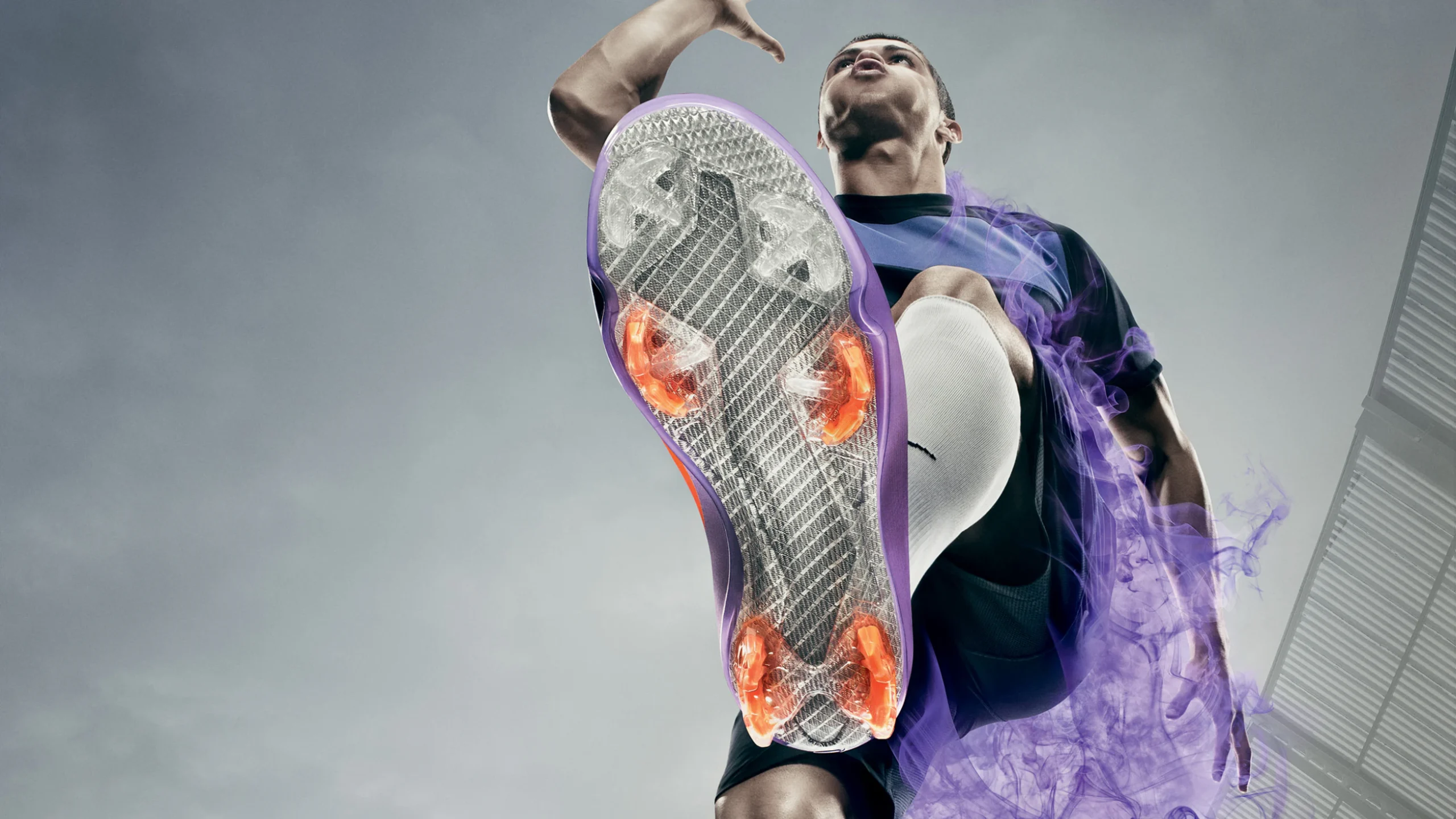
Nike helped change the feeling around the game. Not alone, of course. The growth of soccer in America came from many forces: youth participation, immigration, the USWNT, MLS, global television access, video games, Champions League visibility, social media, and the increasing presence of American players abroad. But Nike played a distinct role. It helped make soccer feel legible to American youth culture. It connected the Saturday morning sport to Ronaldinho, Ronaldo, Rooney, street football, speed, music, digital sharing, and a larger global imagination.
That is a subtle shift, but it is the kind of subtle shift that changes markets.
Write the Future Made “Official” Feel Less Important
Then came Write the Future in 2010.
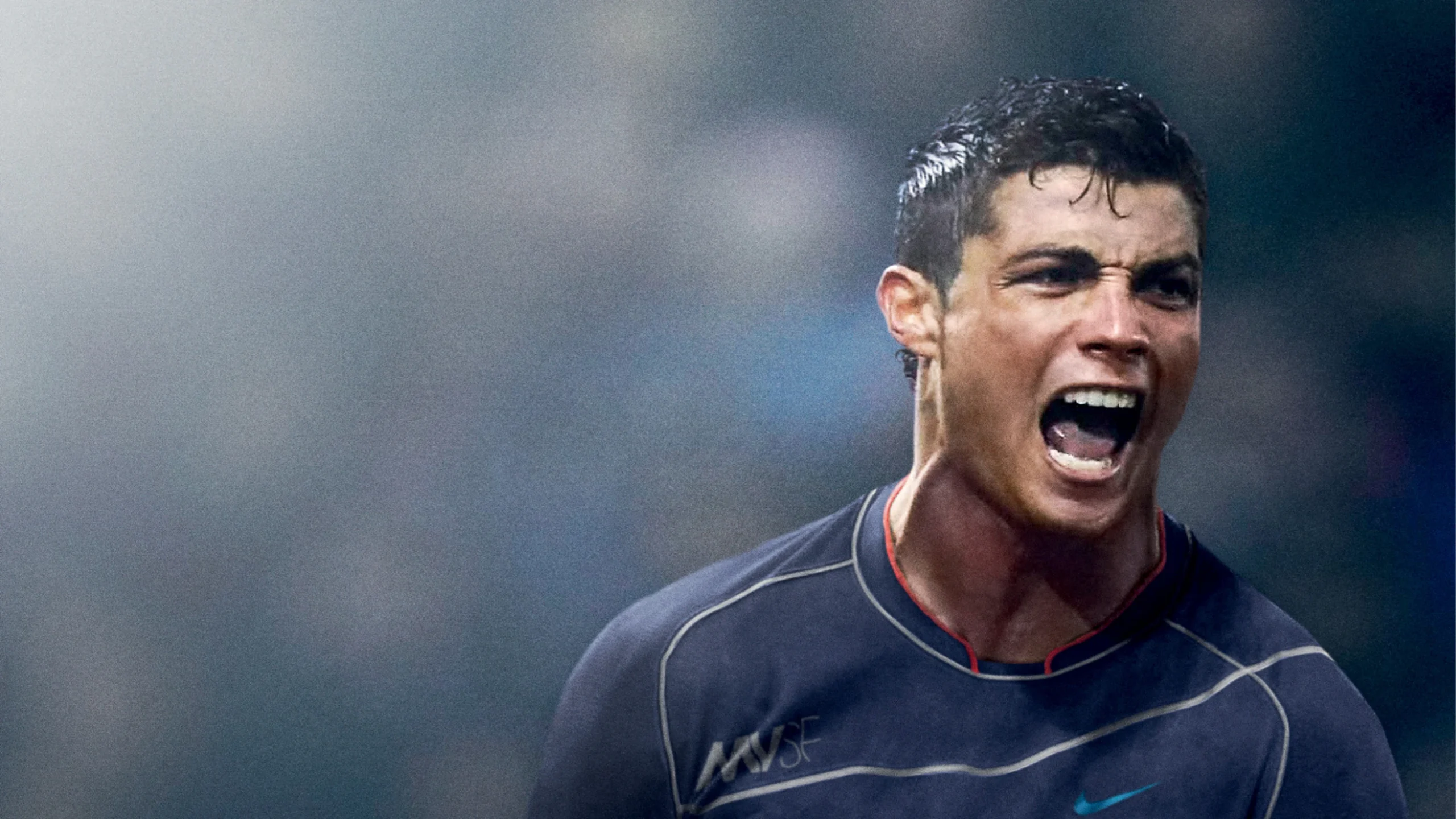
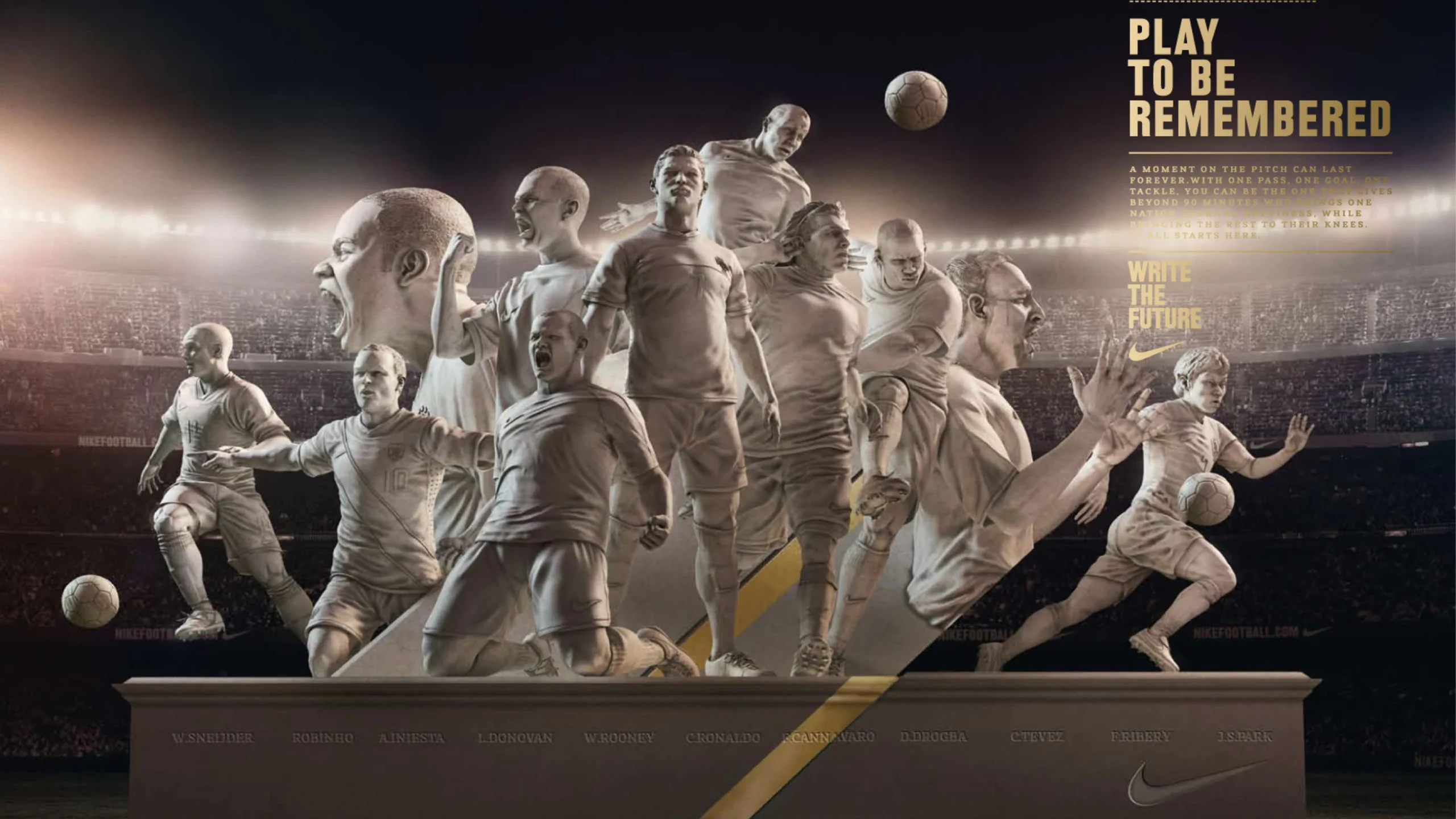
This is the campaign most people remember when they talk about Nike ambushing adidas around the World Cup. Adidas was the official FIFA sponsor. Nike was not. But Nike built one of the most memorable pieces of World Cup advertising ever made, a cinematic three-minute film directed by Alejandro González Iñárritu and featuring players like Cristiano Ronaldo, Wayne Rooney, Didier Drogba, Fabio Cannavaro, and Franck Ribéry.
The idea was simple and enormous: one moment in a match can change everything. A touch, a tackle, a missed chance, a goal. The film exaggerated that truth into a series of futures: glory, humiliation, fame, collapse, national worship, national disappointment. It was absurd in places, which helped. It understood the melodrama of sport without becoming too precious about it.
That was the brilliance. It did not sell the World Cup as an event. It sold the emotional stakes of the World Cup.
The numbers support the point. Nielsen found that Nike, despite not being an official sponsor, was strongly associated with the tournament through online conversation. The Guardian reported that Nike’s campaign generated more than twice as many World Cup-related online references as adidas, with adidas ranking second. Nike also said the ad had more than 5 million YouTube views in four days, which was a very different kind of scale in 2010 than it would be today.
That is what people often call ambush marketing. Fair enough. But I think the more useful lesson is not “find a loophole around sponsorship rights.” That is the small reading. The bigger lesson is that Nike understood where meaning was actually being made.
Official sponsorship gave adidas presence. Nike created participation.
Official sponsorship gave adidas legitimacy. Nike created memory.
Official sponsorship put adidas inside the event. Nike put itself inside the conversation people were having about the event.
That is a very different kind of power.
The Work Was Cool, but Cool Was Not the Strategy
Looking back, it is easy to romanticize the creative work because it was cool. And it was. The films were beautiful. The athletes were magnetic. The editing, styling, music, product, and attitude all had that Nike voltage.
But cool was not the strategy. Cool was the result of a strategy that knew exactly where the opening was.
This is where I think a lot of companies misread Nike. They look at the surface and think the lesson is to be bolder, louder, younger, more cinematic, more famous, more viral. Sometimes that helps. Often it just creates expensive noise.
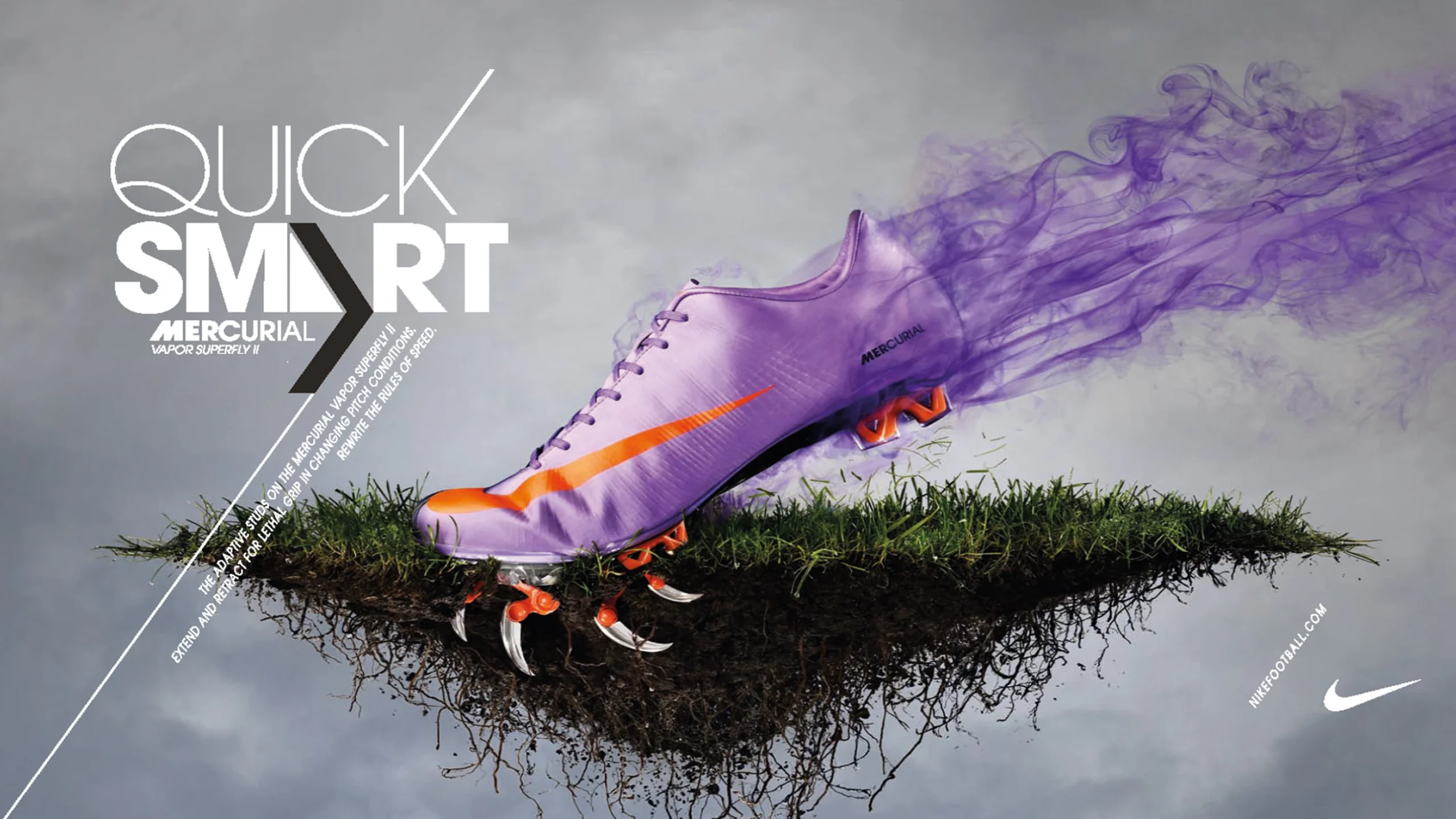
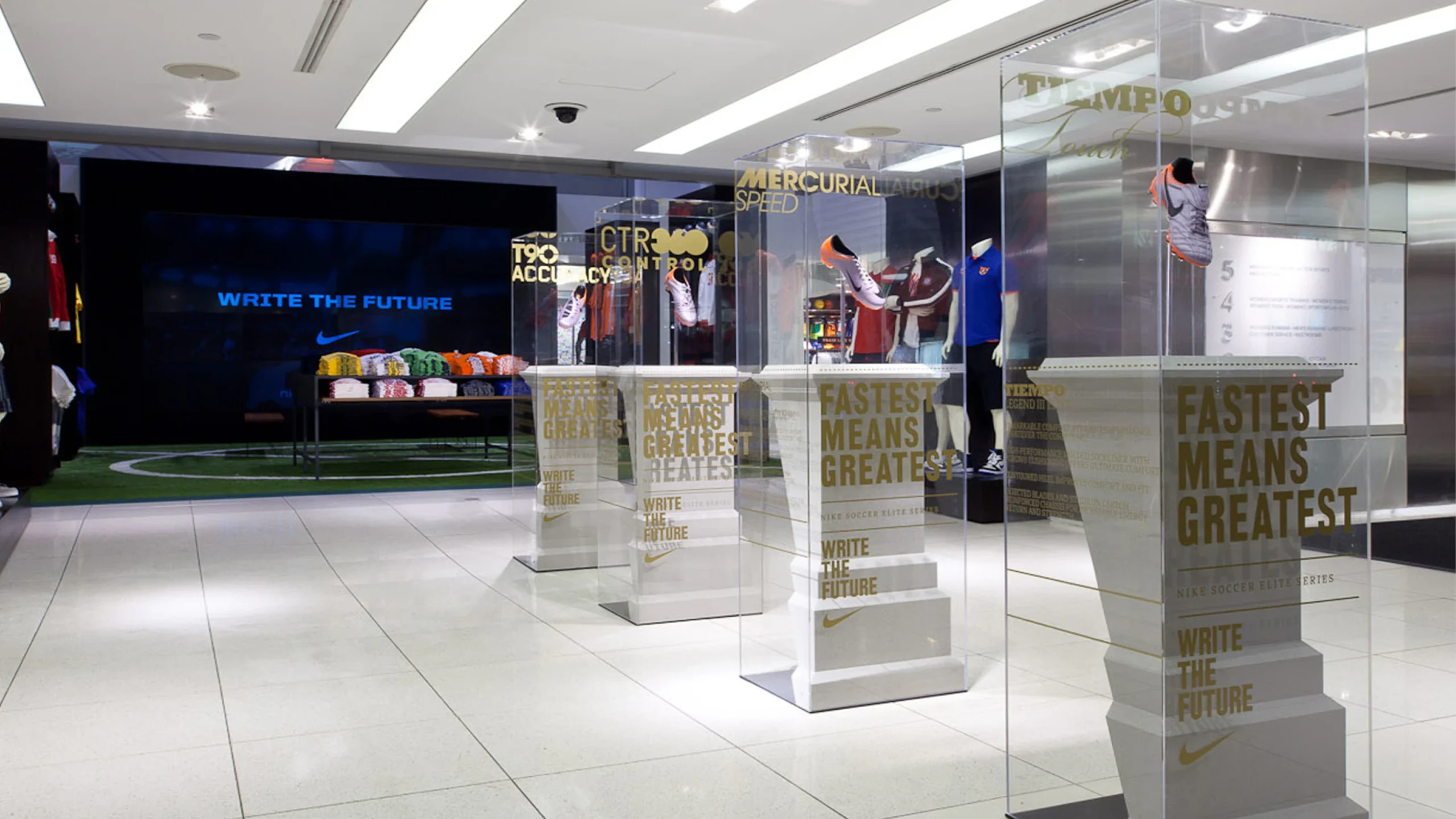
The deeper lesson is that Nike aligned a lot of pieces around the same strategic idea. Product mattered. Athlete relationships mattered. Digital mattered. Community access mattered. Retail mattered. Film mattered. National-team storytelling mattered. The U.S. Soccer relationship mattered. The design of the kits mattered. The way the game showed up in cities mattered.
That is the part most brands skip. They want the breakthrough moment without building the system that makes the breakthrough believable.
At Watson, this is something we talk about often in different language. A brand is not a campaign, a mark, a tagline, or a launch asset. A brand is a system of meaning. Every touchpoint either builds trust or weakens it. The best work holds together across product, story, behavior, audience, culture, and follow-through.
Nike Football worked because the idea did not live in one place. It moved. It had rhythm. You could see it in the athletes, feel it in the films, play it on a small-sided court, wear it, share it, talk about it, and recognize it instantly.
That is not a campaign. That is a world.
The Lesson for Challenger Brands Today
The playbook was specific to sport, but the strategic pattern travels. Three lessons from that era still apply to any challenger brand.
Do not fight the incumbent only where the incumbent is strongest
If a competitor owns scale, do not make scale your only argument. If they own tradition, do not spend all your energy trying to look older than you are. If they own technical complexity, do not assume the market wants more complexity. If they own official status, ask whether official status is what people truly care about.
Respect the incumbent’s advantage. Study it closely. Then look for the thing their advantage makes hard for them to say, do, or feel. That is often where the opening lives.
Adidas could credibly own football heritage. Nike could credibly own the future-facing athlete. Adidas could stand for the institution of the game. Nike could stand for the emotional electricity of the player. Adidas could show up as official. Nike could show up as inevitable.
Different game.
Find the audience that is ready for new language
Disruption rarely starts by converting the incumbent’s most loyal believers. It often starts with people at the edge of the category: younger audiences, newer participants, adjacent communities, underserved groups, or people who feel the category has not quite been speaking to them.
In the U.S., soccer had a massive participation base but a different kind of cultural challenge. Nike helped give American kids a more aspirational way to see the sport. It was not simply “the game you play.” It was a global language of speed, style, creativity, and identity.
For clients, I often translate that into a practical question: who is waiting to feel invited? Not targeted. Not segmented. Invited.
There is a difference. Targeting can feel like a media decision. Invitation feels like a brand decision. It changes the language, the imagery, the product experience, the channels, the partnerships, and the posture.
Change the reward, not just the message
A lot of positioning work gets stuck at the level of claim. We are faster. We are smarter. We are more personal. We care more. We have better service. We have deeper expertise. Fine. Some of that may be true. But if the audience still sees the category the same way, those claims only go so far.
Nike changed the reward. Football was not framed only as winning, performance, or tradition. It became expression. It became courage. It became fame and risk. It became a way to participate in global culture. It became a way to be seen.
That is much stronger than saying, “Our boots are better.”
In almost every category, there is a surface pain and a deeper reward. The surface pain might be cost, complexity, visibility, slow growth, poor conversion, lack of awareness, recruiting difficulty, outdated positioning. The deeper reward is often confidence, pride, belonging, momentum, trust, relevance, relief, or the sense that the future has opened up a little.
Strong brands speak to the reward.
What I Carry From That Period Into My Own Business
What I took from that era at Nike was not a formula. Formulas age badly. What I took was a way of thinking.
Look closely at the category. Respect the leader, but do not worship the leader. Understand the emotional rules everyone has accepted without questioning. Find the audience whose needs are changing faster than the category language. Build from truth, not trend. Make the work specific enough to be remembered. Then make sure the system can hold it.
That thinking shows up constantly in my own business. When we work with clients, especially challenger brands, the temptation is often to ask, “How do we prove we are better than the leader?” It is a natural question. It is also sometimes the wrong one.
A better question is, “What is the leader making harder to imagine?”
If the leader makes the category feel complex, maybe the opportunity is clarity.
If the leader makes the category feel cold, maybe the opportunity is care.
If the leader makes the category feel exclusive, maybe the opportunity is invitation.
If the leader makes the category feel institutional, maybe the opportunity is human voice.
If the leader makes the category feel safe, maybe the opportunity is to make sameness feel risky.
That is where brand strategy gets interesting. Not in the adjective swap. Not in the prettier deck. In the frame.
The work has to be honest, of course. A challenger brand cannot simply declare a new reality and hope the market plays along. There has to be substance underneath it: product, service, experience, operations, proof, people, and follow-through. Disruption without substance is just theater, and usually not very good theater.
But when the substance is there, reframing can create real momentum.
Why This Matters Again in 2026
The U.S. hosting the World Cup makes all of this feel newly relevant. Soccer in America is no longer just a question of adoption. It is a question of identity. What does the sport mean here? Who gets to shape it? What does American soccer look, sound, and feel like when it is not borrowing someone else’s mythology?
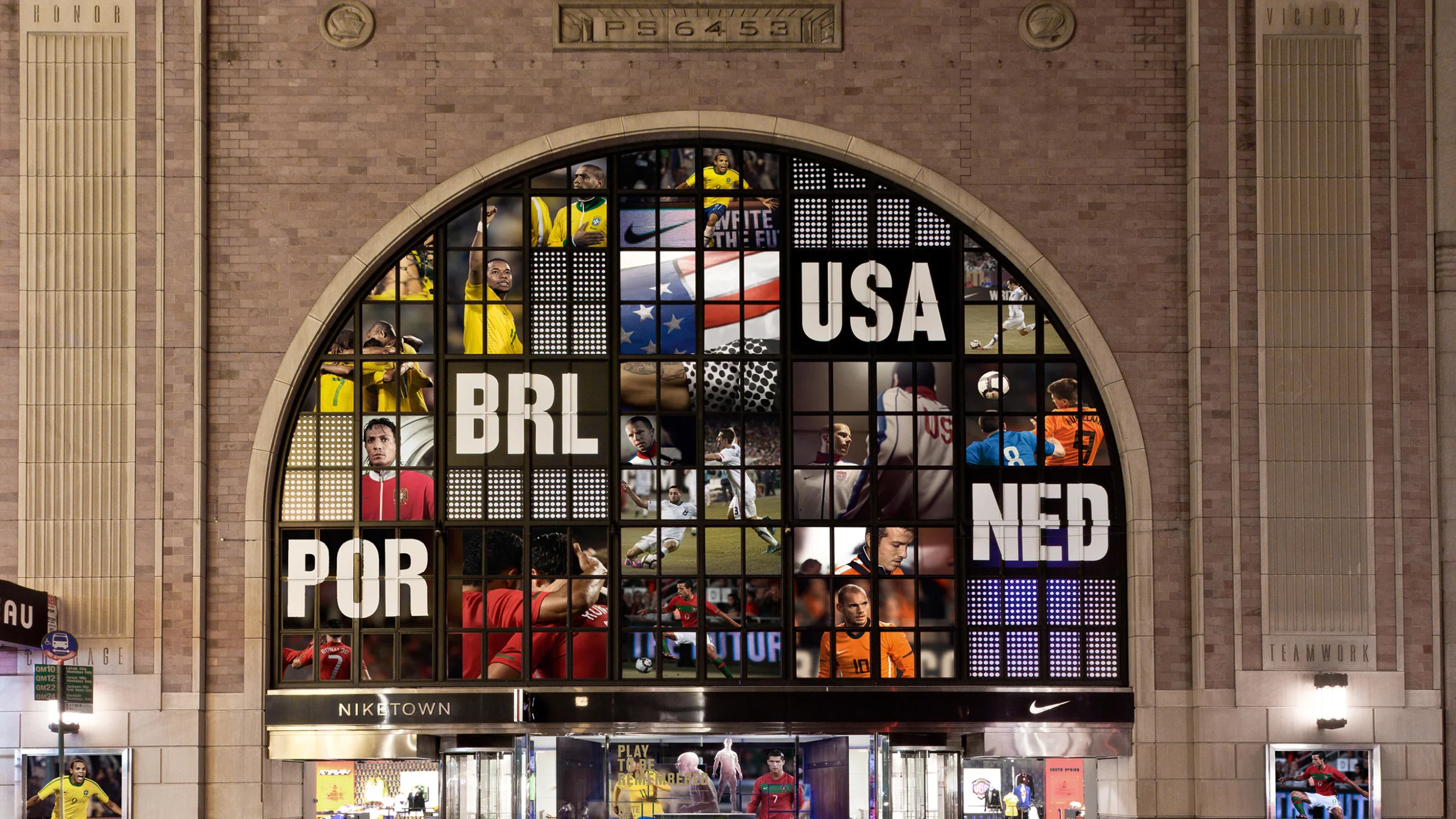
That is why those old Nike Football images still matter. They are not only nostalgic. They are evidence of a brand helping a culture rehearse a future before that future fully arrived.
Before soccer became a main-stage American World Cup moment, Nike was already teaching a generation how to see the game differently. Not as foreign. Not as niche. Not as something that belonged somewhere else. As speed, style, creativity, attitude, pressure, joy, and identity.
That is the power of great brand work. It does not just reflect culture after the fact. It gives people a way to recognize where culture is going.
The best brands do not always win by being more official, more established, or more credentialed. They win by making people feel the category differently. They give people a new way to belong. They build a world around that feeling. Then they back it up, touchpoint by touchpoint, until the new frame starts to feel obvious.
Nike did not beat adidas at its own game by trying to be more adidas than adidas. It asked a better question.
What if the future of football belonged not to the most official brand, but to the brand that made the game feel most alive?