


How Watson Helped Launch Trackhouse: NASCAR’s Most Disruptive New Team

From the outside, NASCAR can appear impenetrable—an institution with deep roots, sharp edges, and fierce traditions. Launching a new team inside that world, let alone one that would redefine its creative language, required more than ambition. It required a brand with conviction, cultural fluency, and the courage to enter the sport’s most storied arenas with something entirely new to say.
Before Trackhouse became a household name, long before the wins, headlines, and celebrity partnerships, it was an idea—bold, untested, and unusually self-aware. They approached Watson Creative not for decoration, but for direction: to build a brand that could compete in a sport driven by loyalty, adrenaline, and legacy.
What followed was an immersion into NASCAR’s culture, a distillation of Trackhouse’s ethos, and a brand system crafted to be as sharp and unrelenting as the team’s ambitions.
Building a Brand with Purpose
Trackhouse came to us with a challenge framed not by constraints, but by opportunity. They were not asking to look like anyone else in the sport. They weren’t even asking to look like a racing team. They wanted to look like themselves.
The strategy centered on clarity: What does Trackhouse stand for? What do they reject? What do they carry into every race? This wasn’t about manufacturing a persona—it was about uncovering a cultural identity that already existed, then amplifying it.
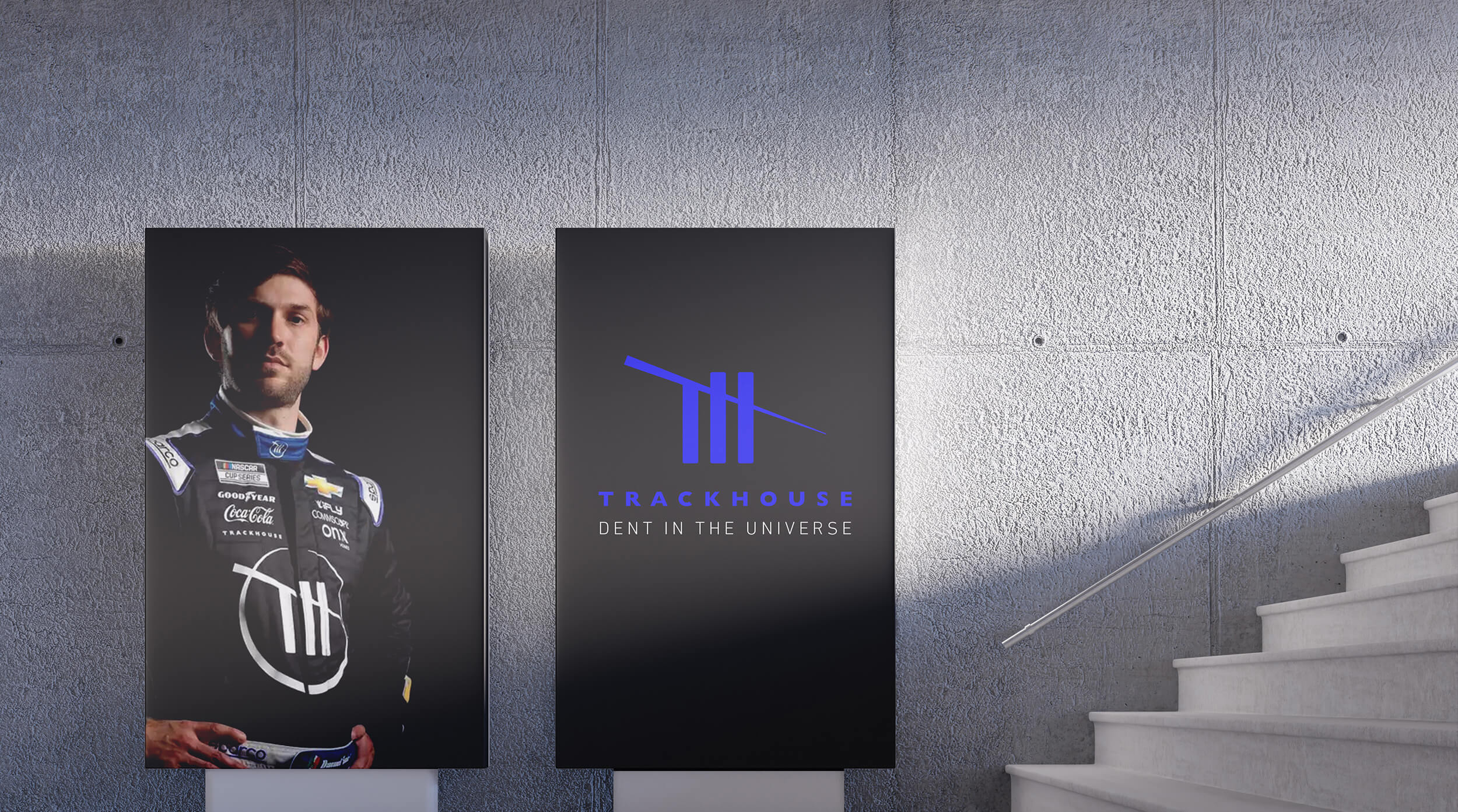
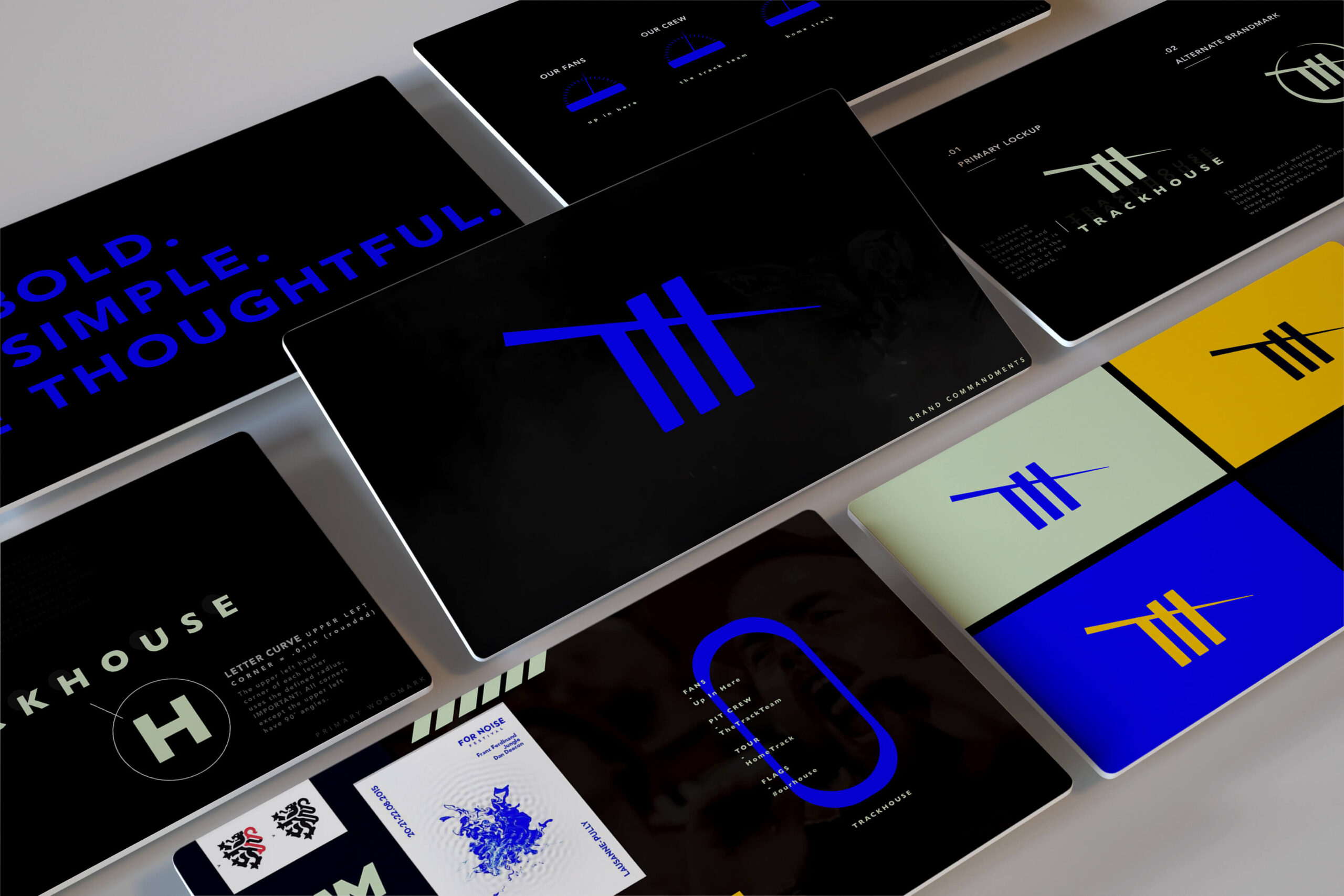
We developed a brand system that was disciplined yet expressive. Every component—from typography and tone to color, iconography, and motion—served a purpose. The system had to move fast, scale cleanly, and hold its own against the visual noise of racing environments.
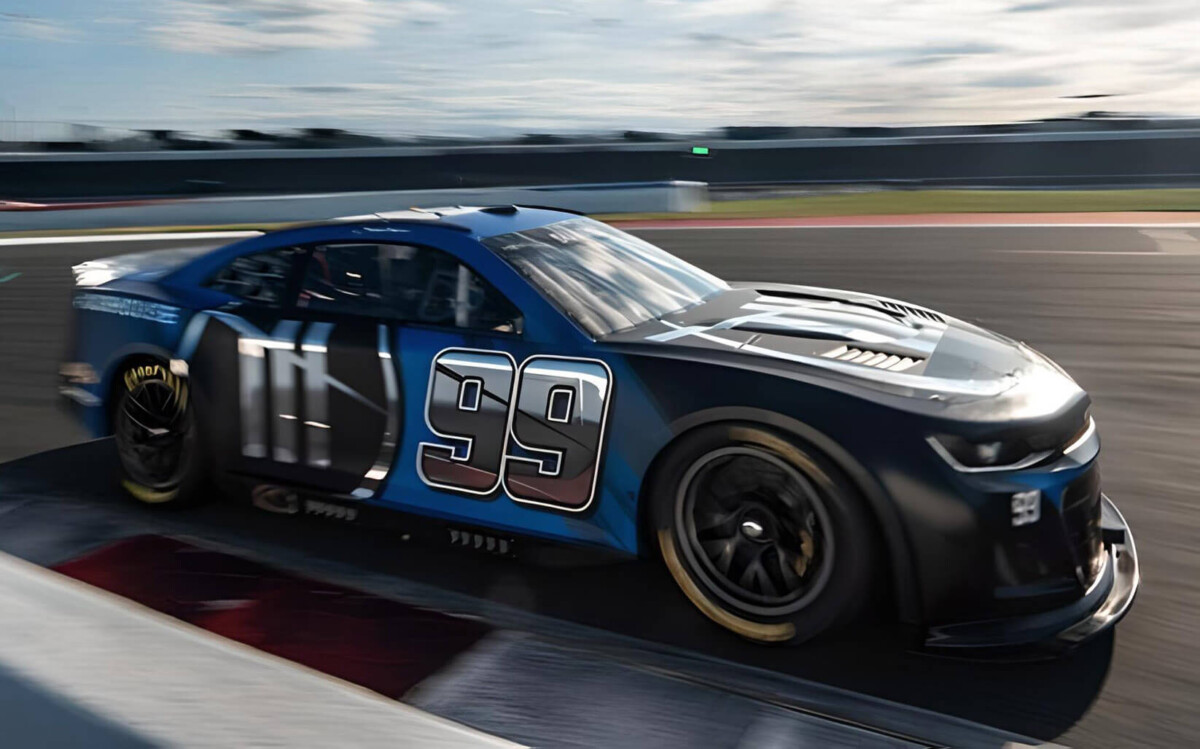
Trackhouse needed a brand that could withstand mud, asphalt, fire, champagne, and millions of eyes. We built it to be unmistakable at 200 miles per hour.
Identity That Doesn’t Flinch
Many teams rely on tradition to signal legitimacy. Trackhouse relied on authenticity. Their brand was designed to feel modern without chasing trends, grounded without feeling predictable. The aesthetic lived at the intersection of precision and attitude—a balance that mirrors the duality of racing itself.
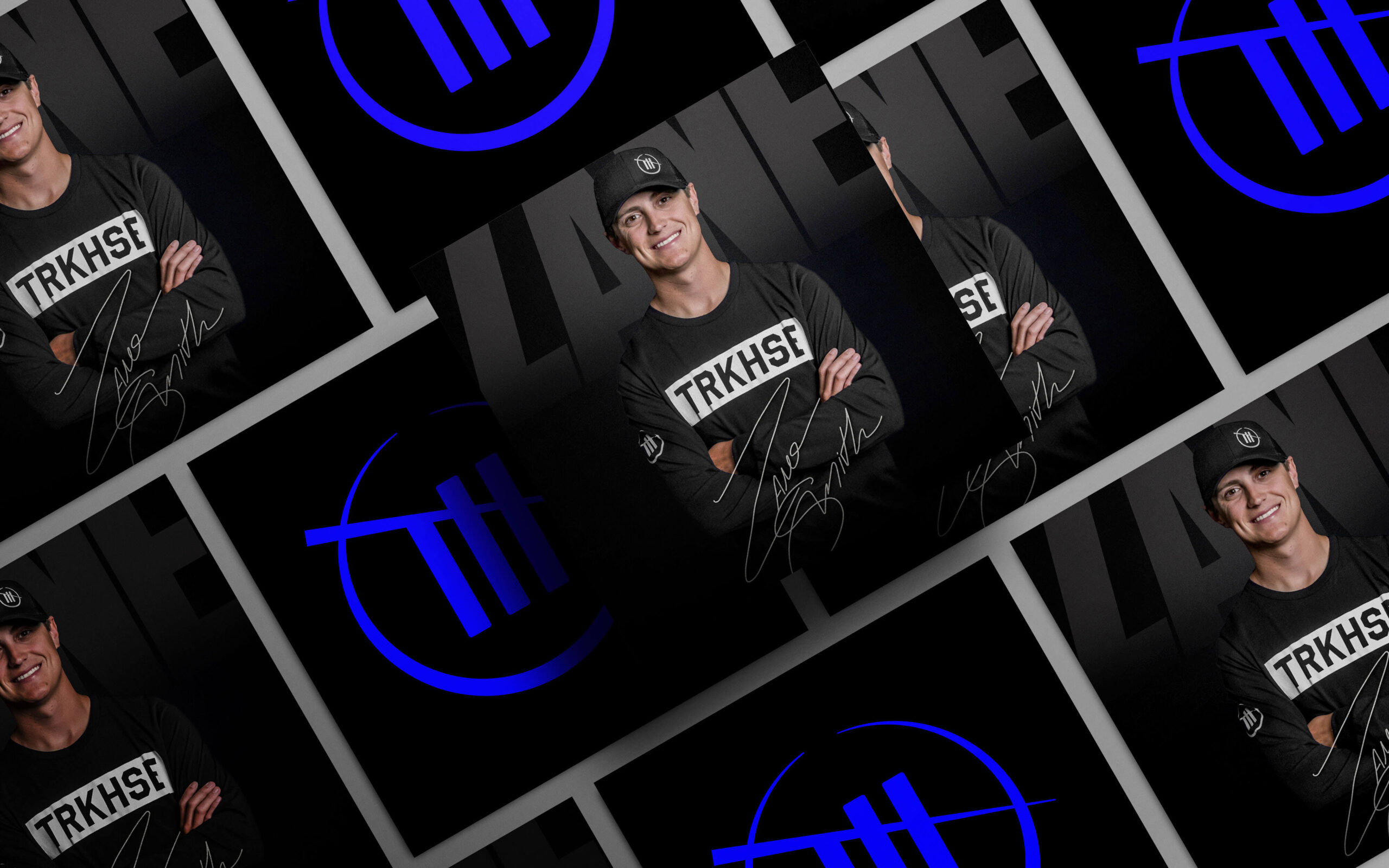
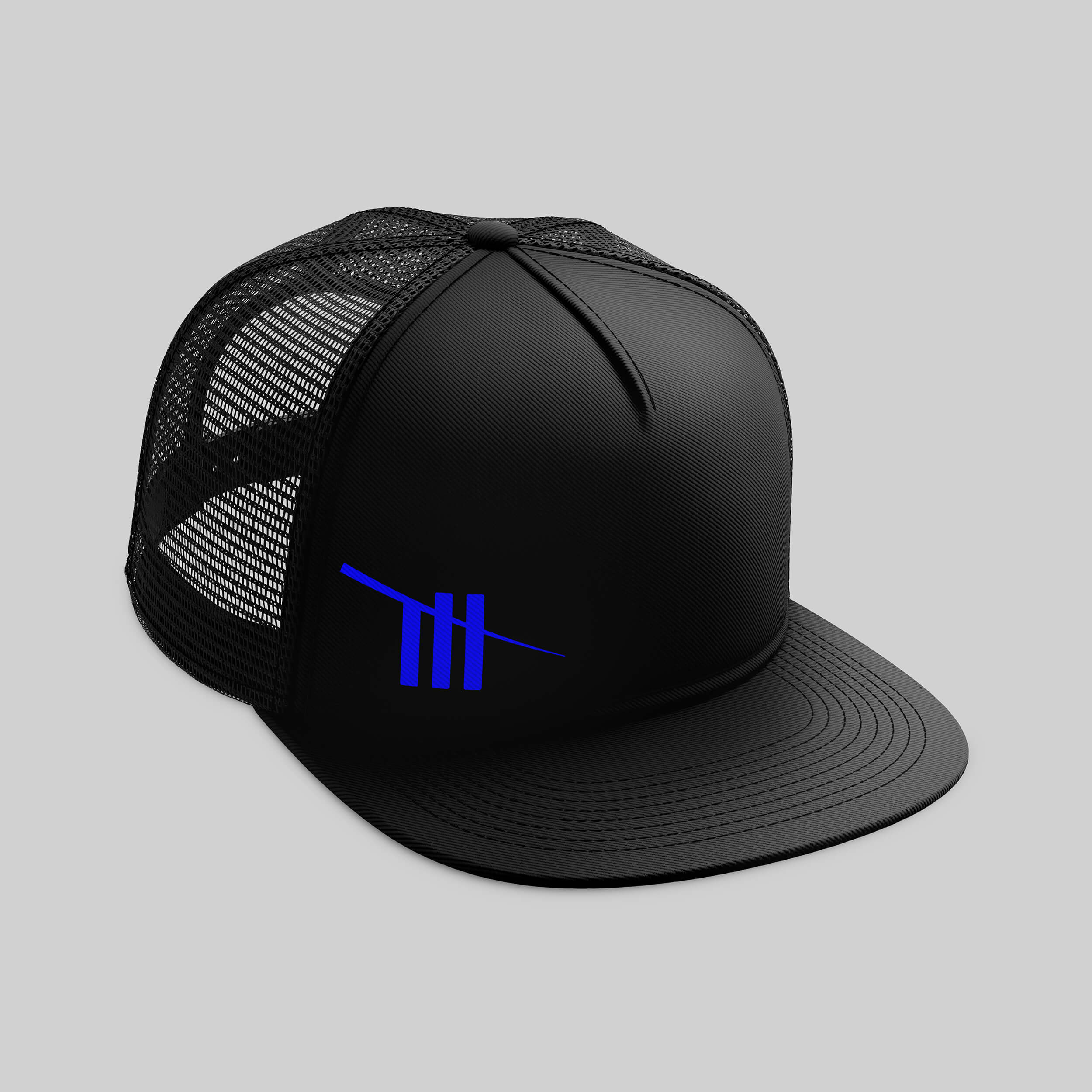
We established a core visual DNA that could flex across environments without losing coherence. That included adjustments for digital, apparel, vehicle liveries, merchandise, live events, and broadcast integrations.
The brand wasn’t designed to shout. It was designed to hit cleanly and consistently, no matter where it appeared.
As the team evolved, the system evolved with them—expanding to support new series, new partnerships, and new cultural crossovers. The brand became a living organism: responsive, committed, disciplined.
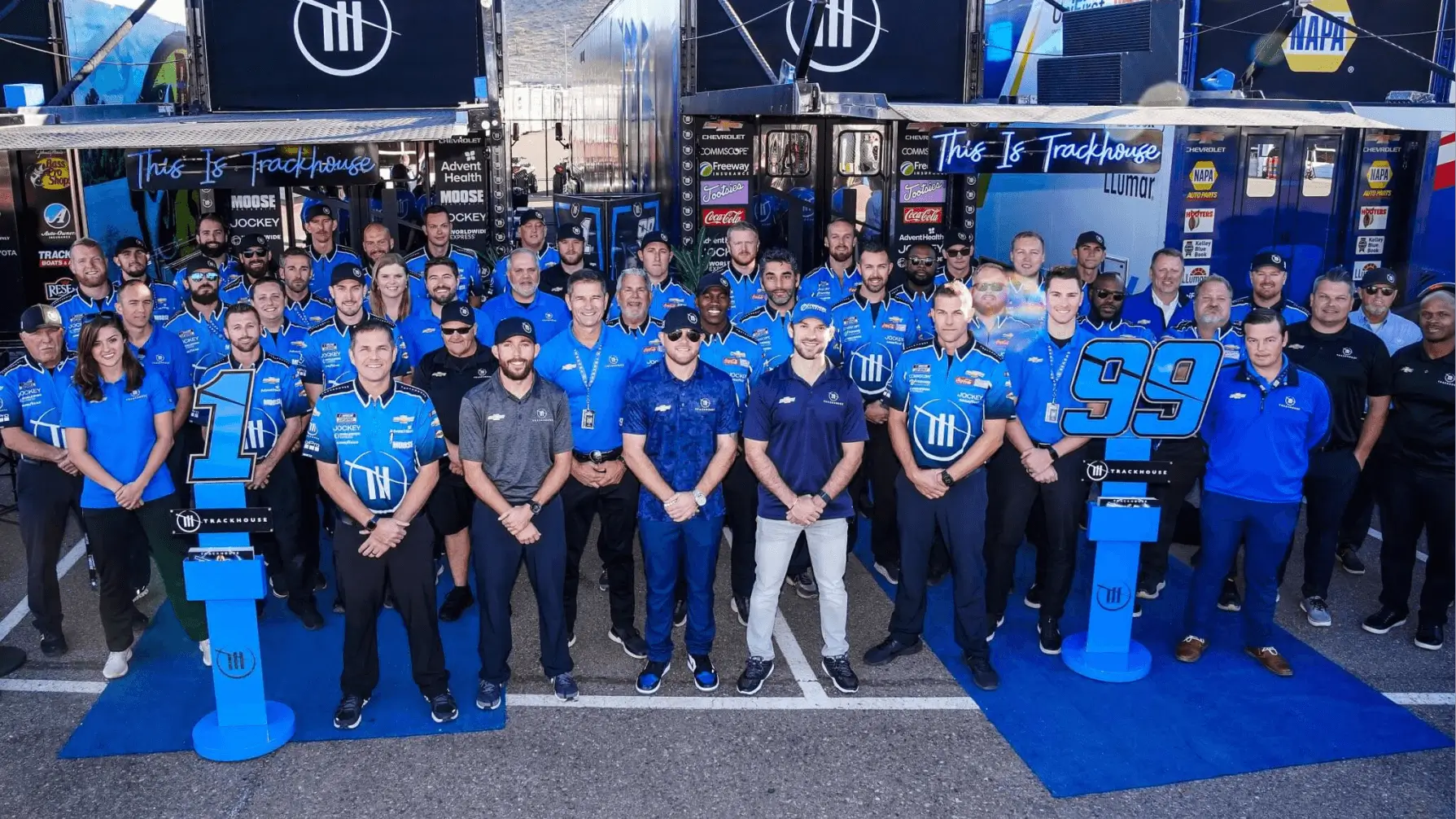
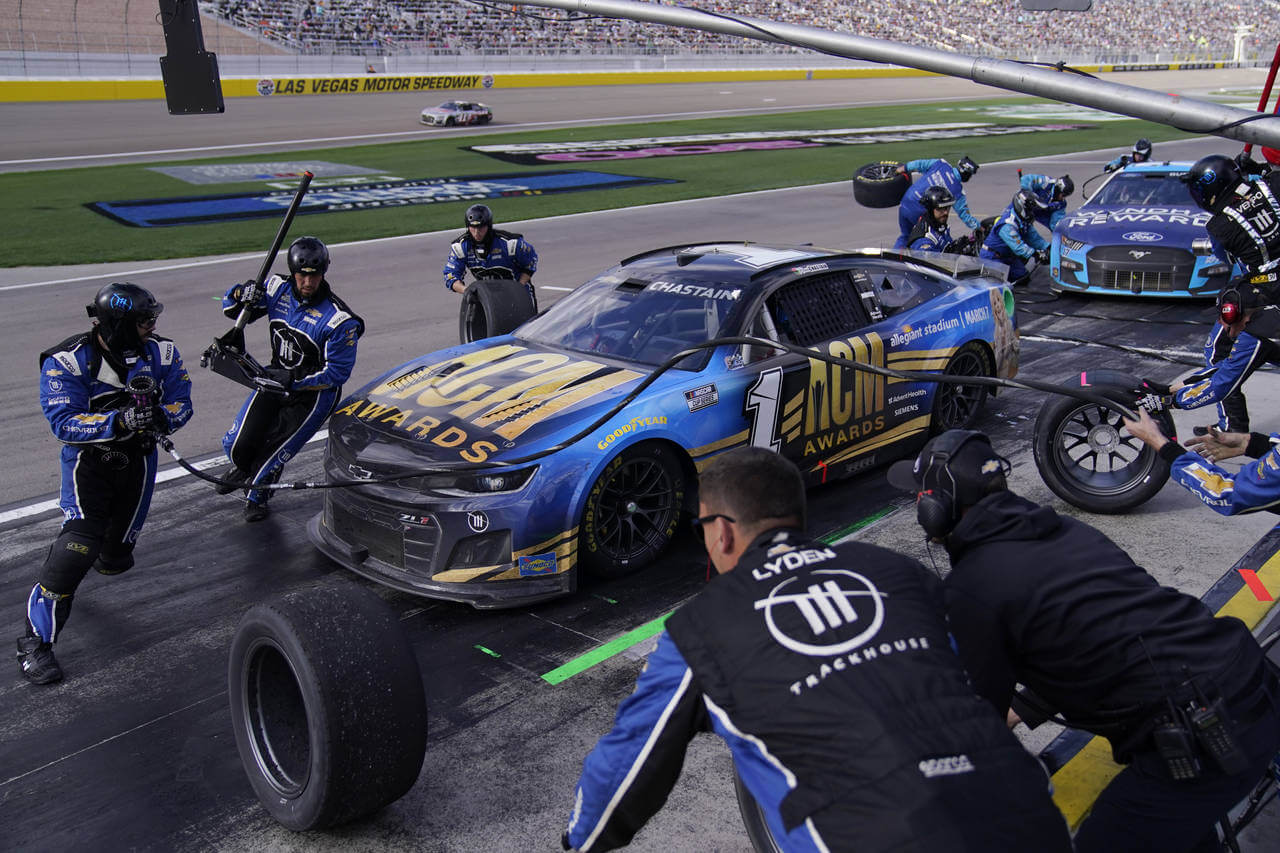
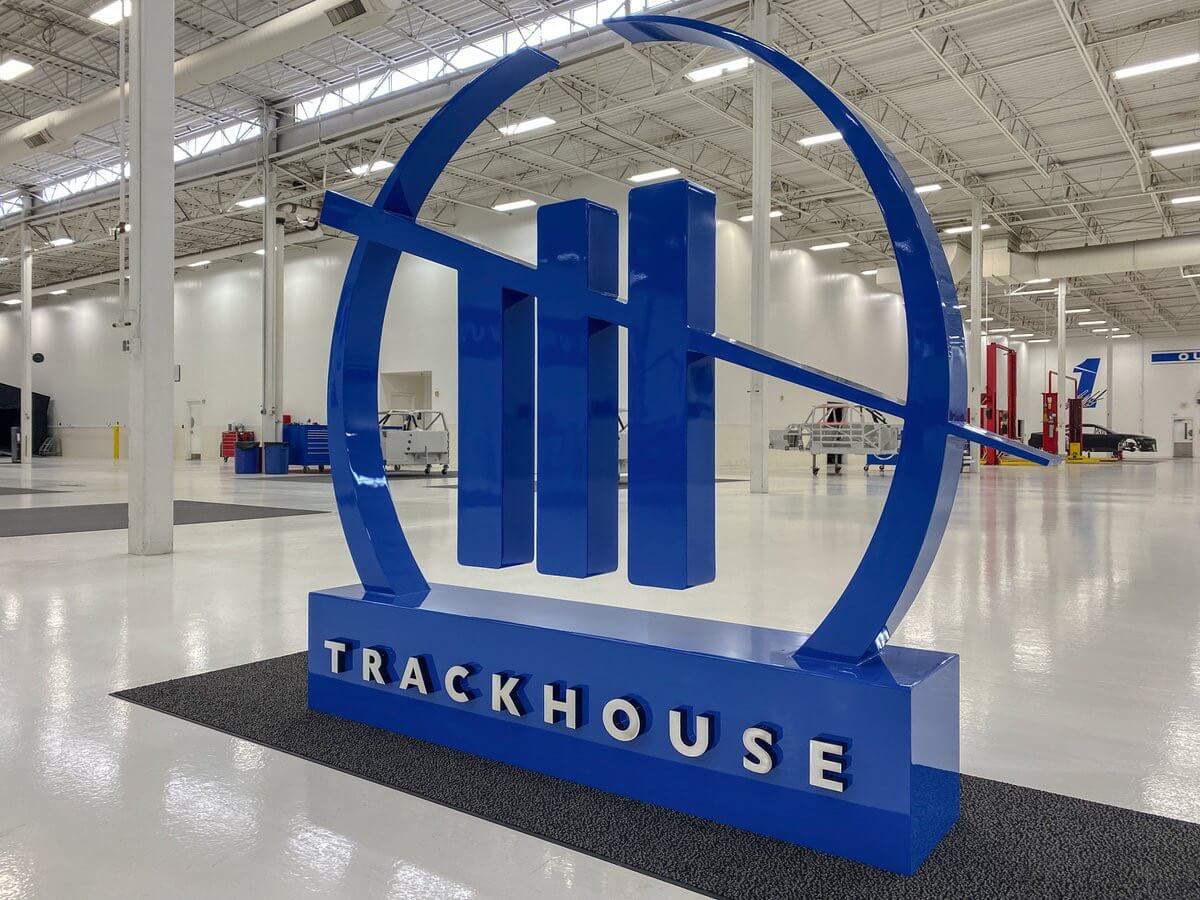
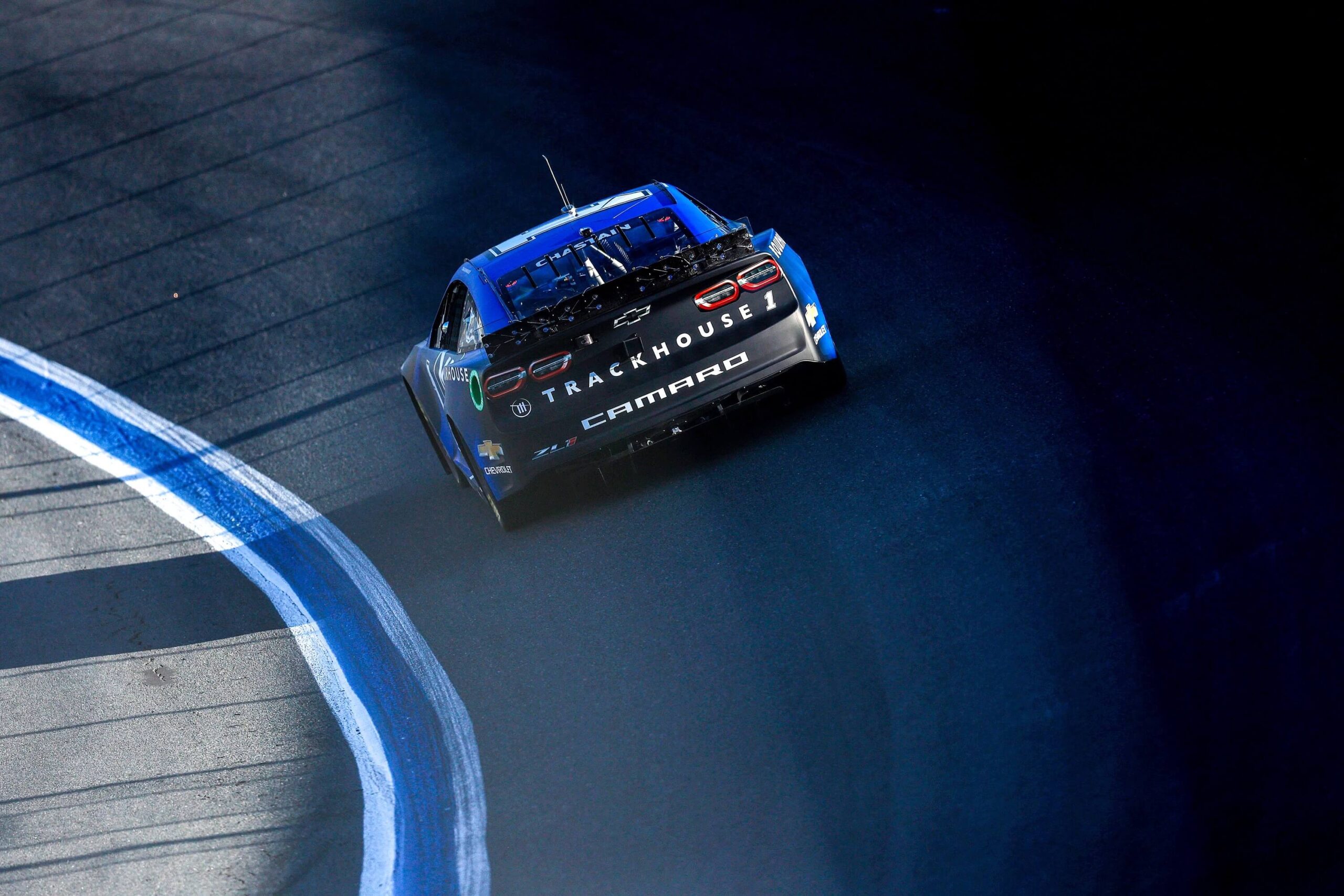
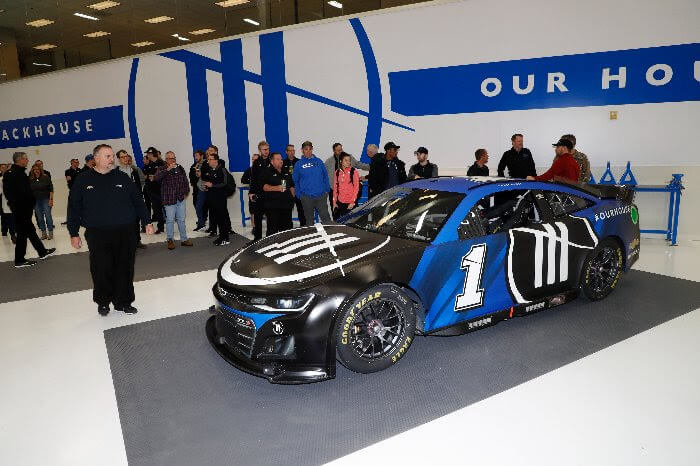
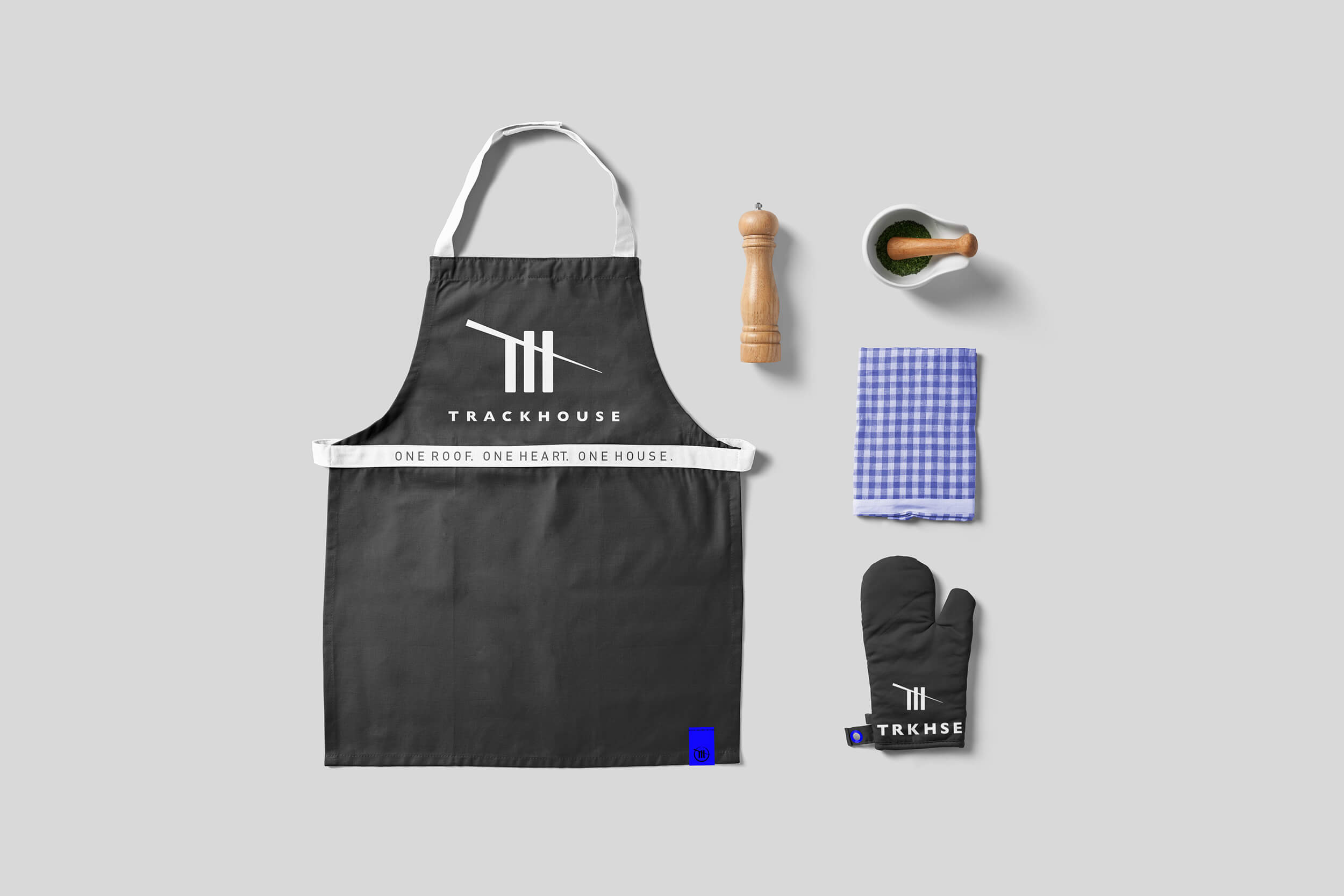
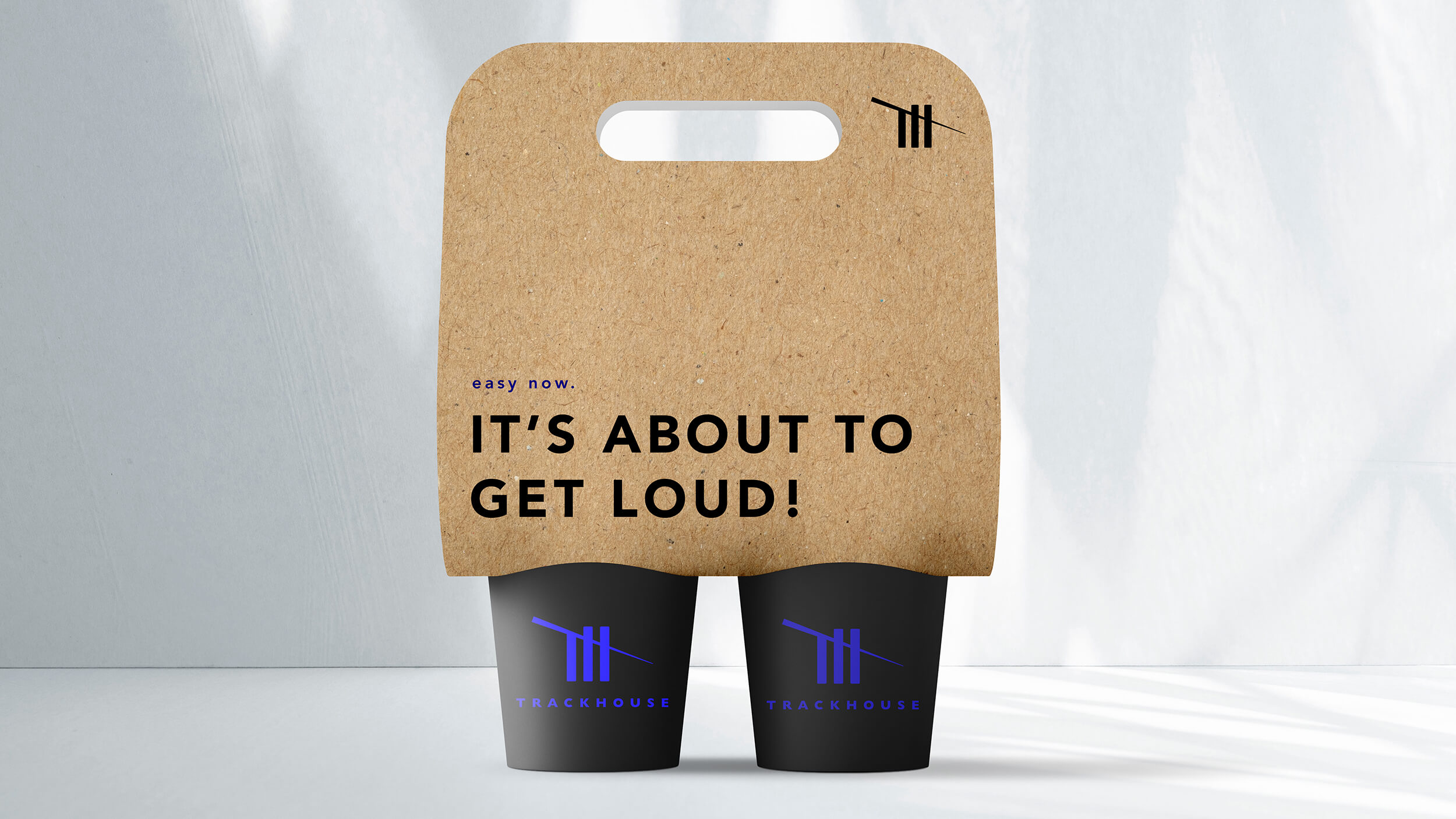
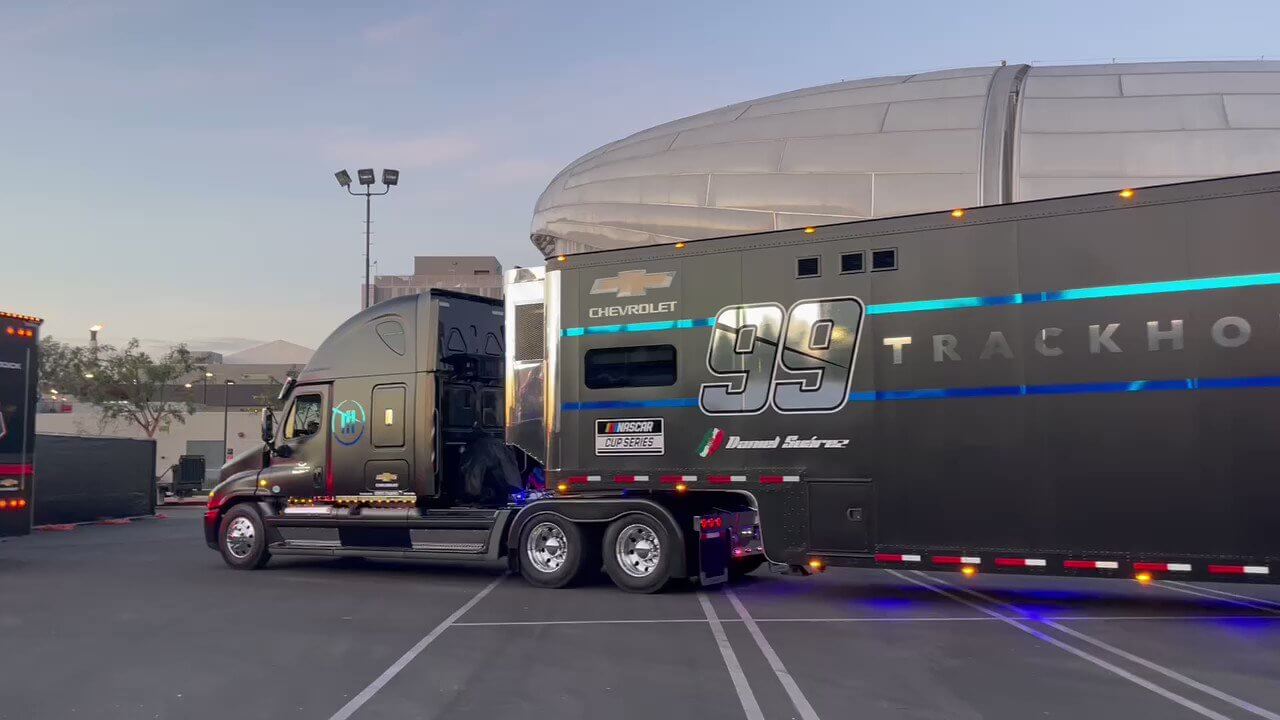
A Team That Refused to Be Ordinary
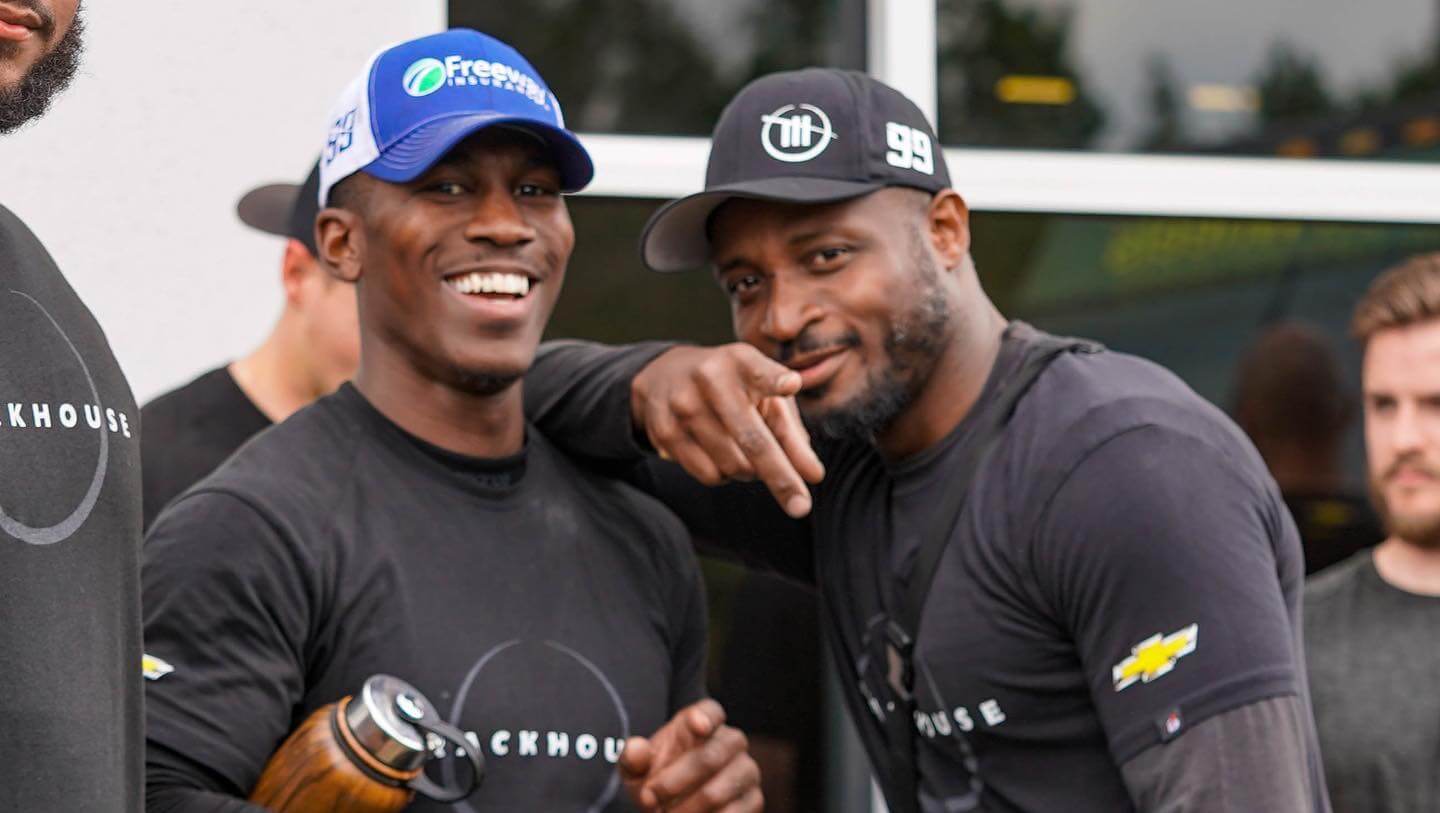
Trackhouse’s ambition was never to be simply competitive. They wanted to be culturally relevant—an uncommon aspiration in motorsports. They sought to bring in new fans without alienating traditional ones, to operate with both humility and intensity, and to carry themselves with the clarity of a brand that knows what it stands for.
That attitude influenced everything:
- how the team communicates
- how the drivers show up
- how the organization presents itself beyond the track
The brand was built to support that posture—bold enough to claim space, restrained enough to maintain focus.
It wasn’t branding for branding’s sake. It was identity infrastructure, built to scale.
Enter: Pitbull
Trackhouse had one more surprise.
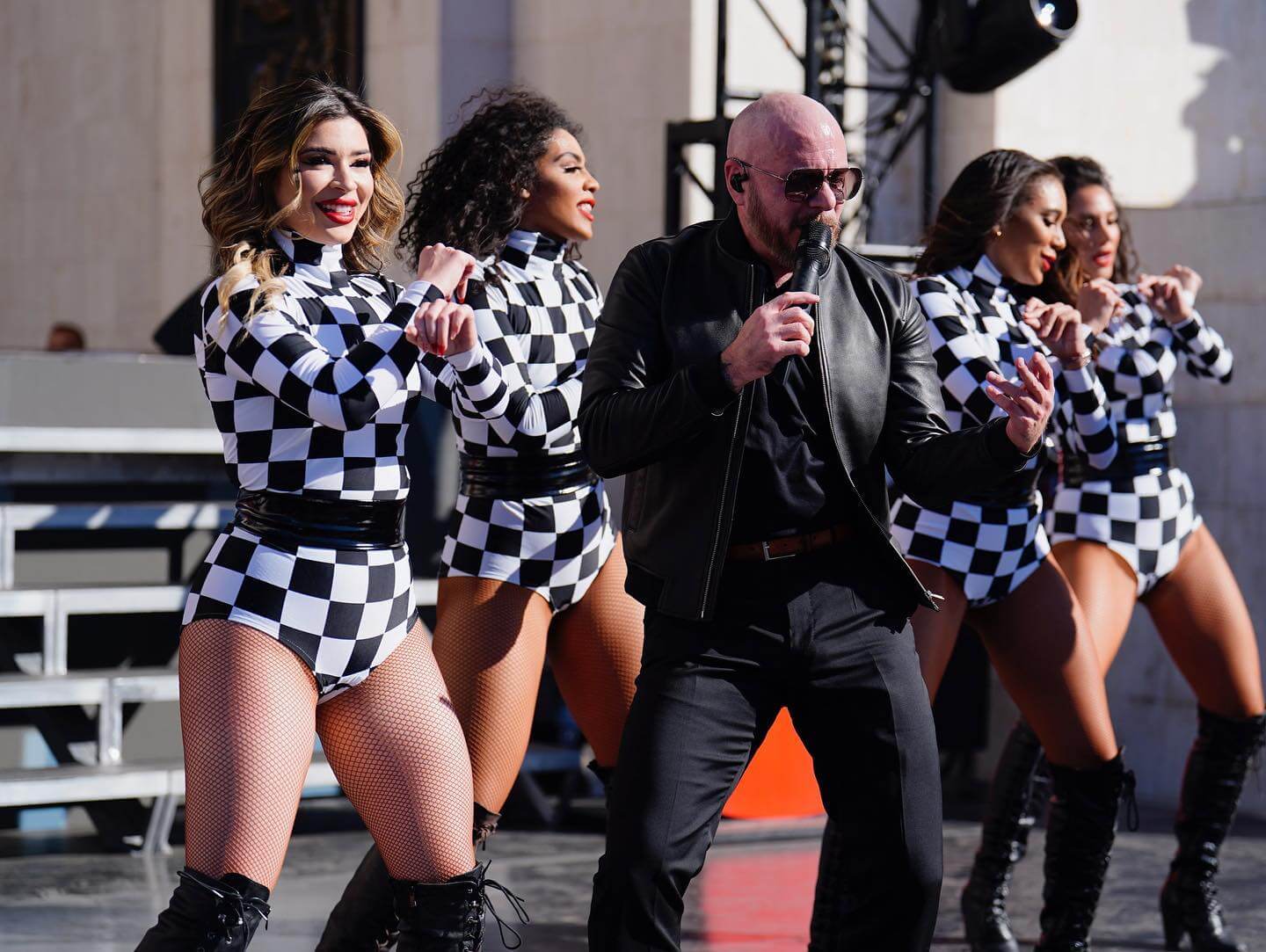
The announcement of Pitbull as a team partner wasn’t a stunt; it was a strategic alignment. He embodies hustle, optimism, global reach, and cultural fusion—qualities already embedded in Trackhouse’s DNA.
His involvement expanded the brand’s voice and widened the team’s cultural aperture. It signaled that Trackhouse wasn’t just entering NASCAR; they were expanding what NASCAR could become.
Bringing Pitbull into the fold required extending the brand architecture so it could hold an even broader range of expression. The system flexed. The identity held. The partnership landed with authenticity and power.
Trackhouse was no longer just a competitive team. It was a cultural signal.
The Work Behind the Wins
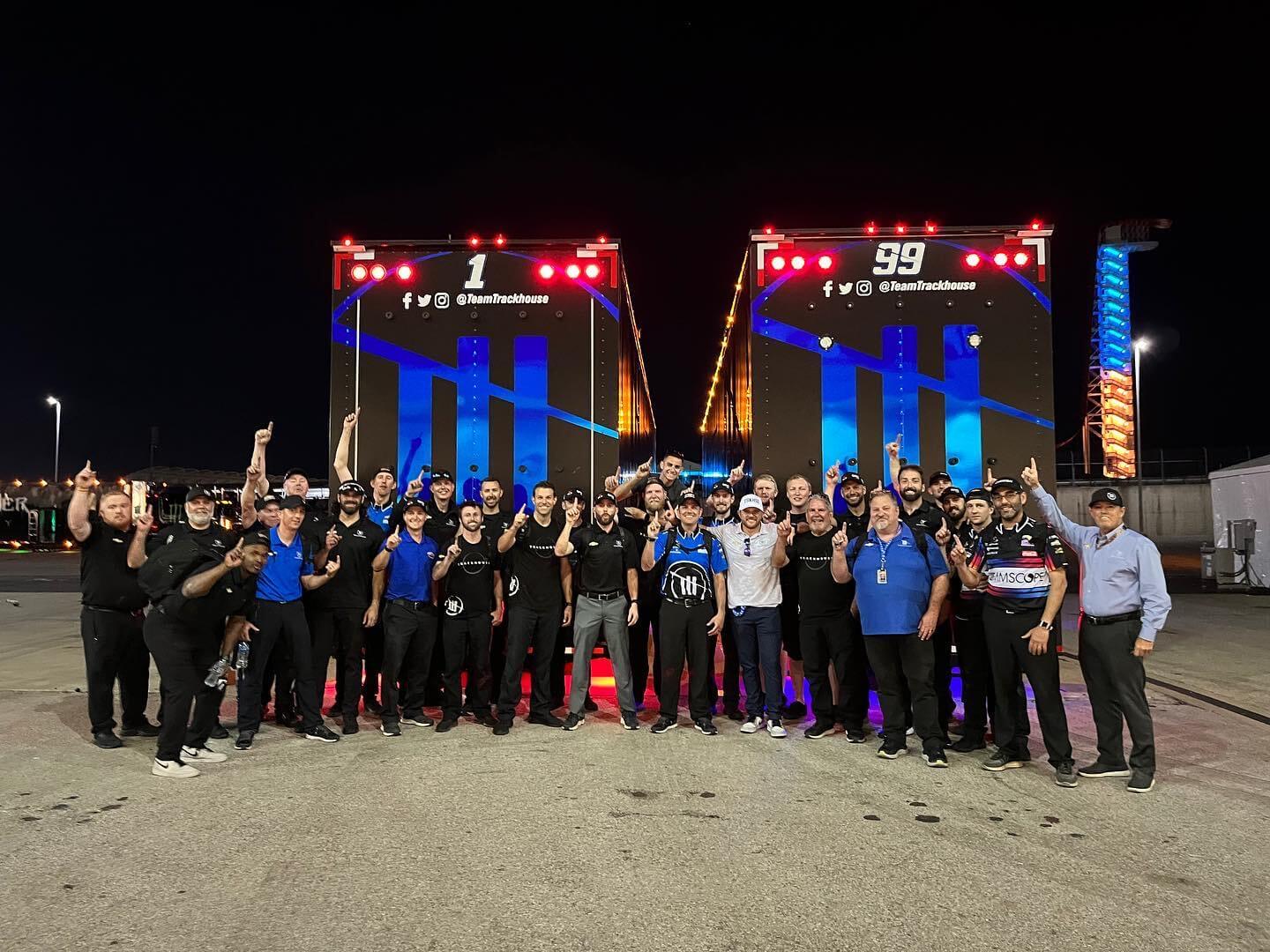
Trackhouse succeeded because the brand and the organization were built with the same principles: discipline, resilience, and clarity. Trackhouse runs lean, works fast, and avoids waste—creative or otherwise. That operational culture shaped the brand just as much as the brand shaped the culture.
When a team knows who they are, design becomes a multiplier. Every asset reinforces identity. Every appearance strengthens recognition. Every race adds a chapter to a coherent, living story.
We weren’t designing a logo.
We were building a philosophy.
More Than Racing
Trackhouse emerged quickly as one of NASCAR’s most disruptive teams not because they tried to stand out, but because they showed up with purpose. Their brand is not a veneer—it is a reflection of how they work, what they value, and how they intend to change the sport.
It has been an honor to help shape that foundation and to watch the organization build on it with determination and creativity.
See you at the next race.