


How Higg Became Worldly: Rebranding a Sustainability Benchmark for Global Impact

How Watson Helped Transform a Measurement Tool into a Movement
The Higg Index is one of the most widely adopted sustainability measurement platforms in the apparel, footwear, and textile industries. Originally developed by the Sustainable Apparel Coalition (SAC), it provides tools that help brands, manufacturers, and retailers evaluate environmental and social impact — from carbon emissions and water usage to labor practices and chemical management. More than a dashboard, Higg has become a shared language for impact measurement across global fashion.
Its reach is expansive. Leading organizations — including Nike, Adidas, Patagonia, H&M, Target, REI, and Levi Strauss — rely on Higg to inform decisions and assess performance across complex supply chains. Its influence extends well beyond compliance; it has shaped how an entire industry interprets responsibility, accountability, and progress.
Why a Rebrand Was Necessary
Despite its significant influence, the Higg Index faced a core challenge: it had outgrown its identity. What began as a technical assessment tool was evolving into something bigger — a platform designed to shift sustainability from a checklist to a strategic imperative. Yet the brand no longer reflected its ambition.
This challenge felt familiar to me because I had lived it. I spent years inside Nike working with ACG and collaborating across the industry — often with direct competitors — to establish shared sustainability standards. There was no established playbook; we were building a vocabulary for environmental accountability from scratch. Years later, after founding Watson, Nike returned as a client for sustainability initiatives. So when the Higg team approached us, the conversation felt both familiar and personal.
Our task was clear: reposition Higg for its next chapter. It needed to evolve from a backend analytics tool into a leadership brand — one capable of translating data into insight, and insight into influence.
The Challenge: Relevance at Scale
Higg’s leadership understood that sustainability had shifted from niche to necessity. Remaining relevant meant strengthening the brand’s resonance — across sustainability teams, C-suites, suppliers, journalists, and beyond. To lead the global conversation, Higg needed a clearer voice, a stronger narrative, and more accessible language.
How We Approached the Rebrand
Our discovery process included:
- Legacy Deep Dive: Honoring origins while identifying what still served the mission.
- Stakeholder Workshops: Activities such as Dichotomies and Archetypes to uncover authentic aspirations.
- Internal Interviews: Capturing cultural insight directly from the team.
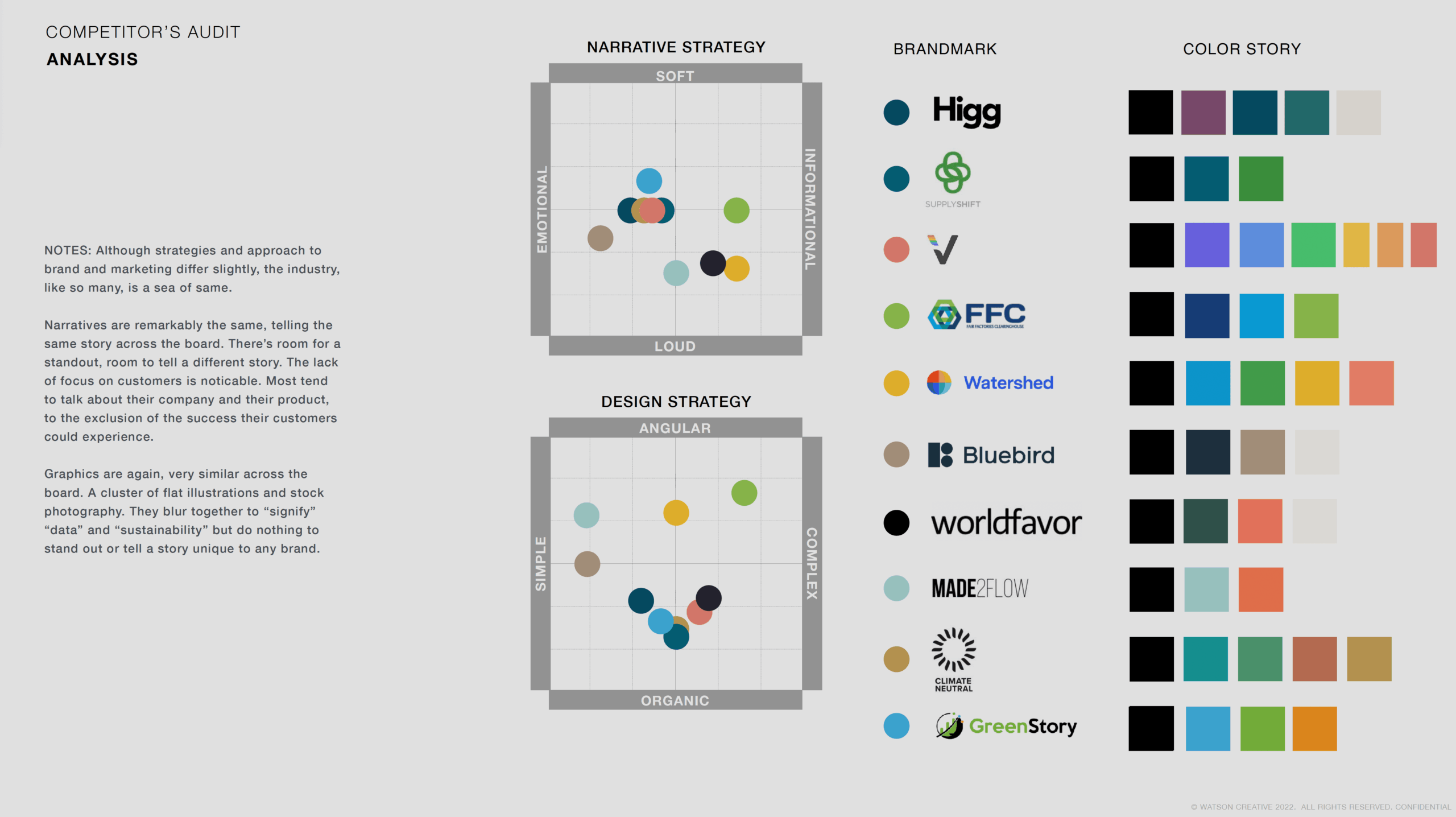
- Brand and Market Audits: Benchmarking against B2B data and sustainability sectors.
- Qualitative + Quantitative Research: Surveys and ethnographic studies to understand emotional drivers and user behavior.
- Secondary Research: Mapping macro trends in ESG, regulation, and consumer demand.
The research made it clear: Higg needed a unified, human-centered brand platform — something flexible enough to operate across industries, audiences, and continents.
Strategic Foundation: Catalytic Intelligence
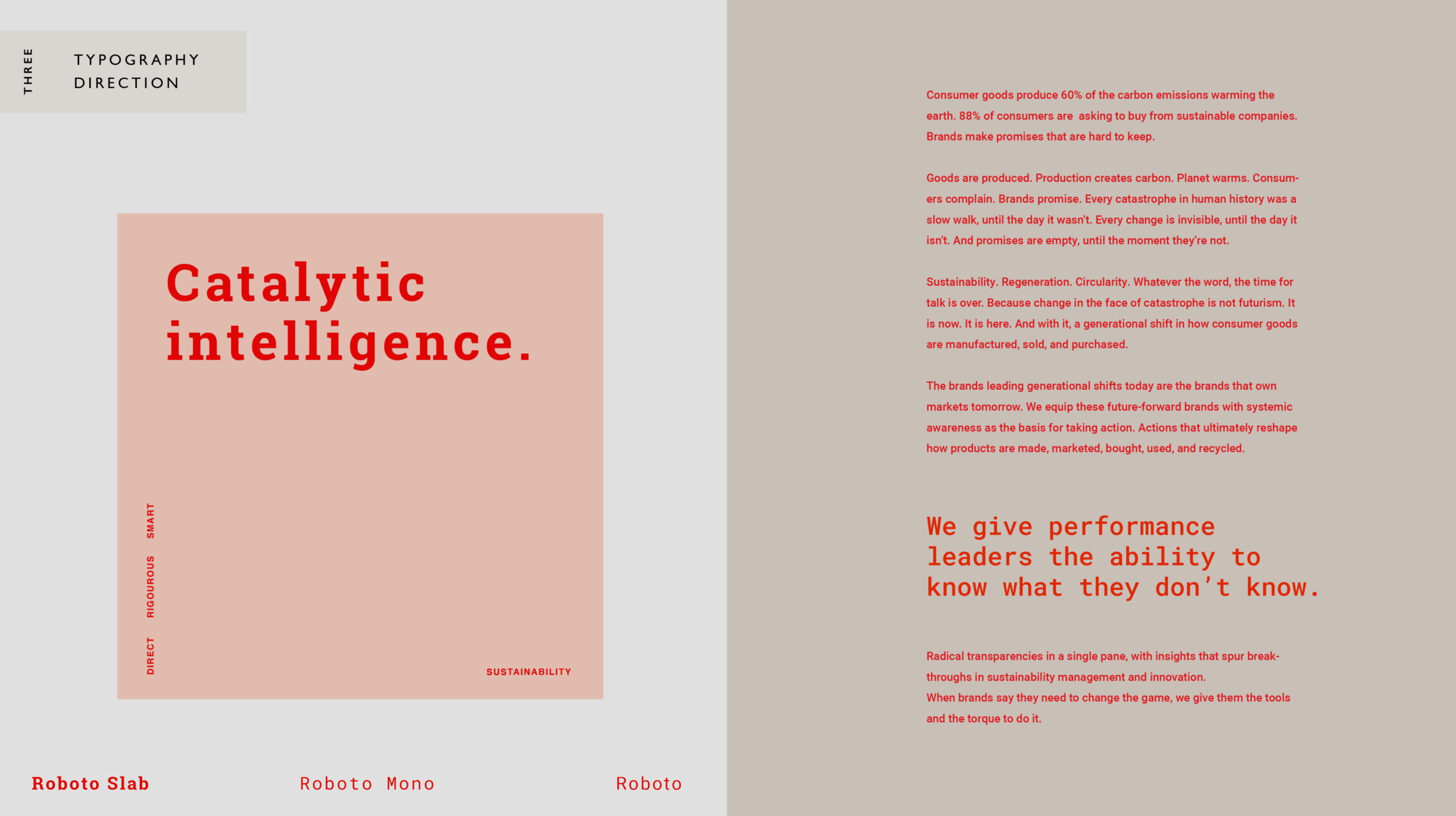
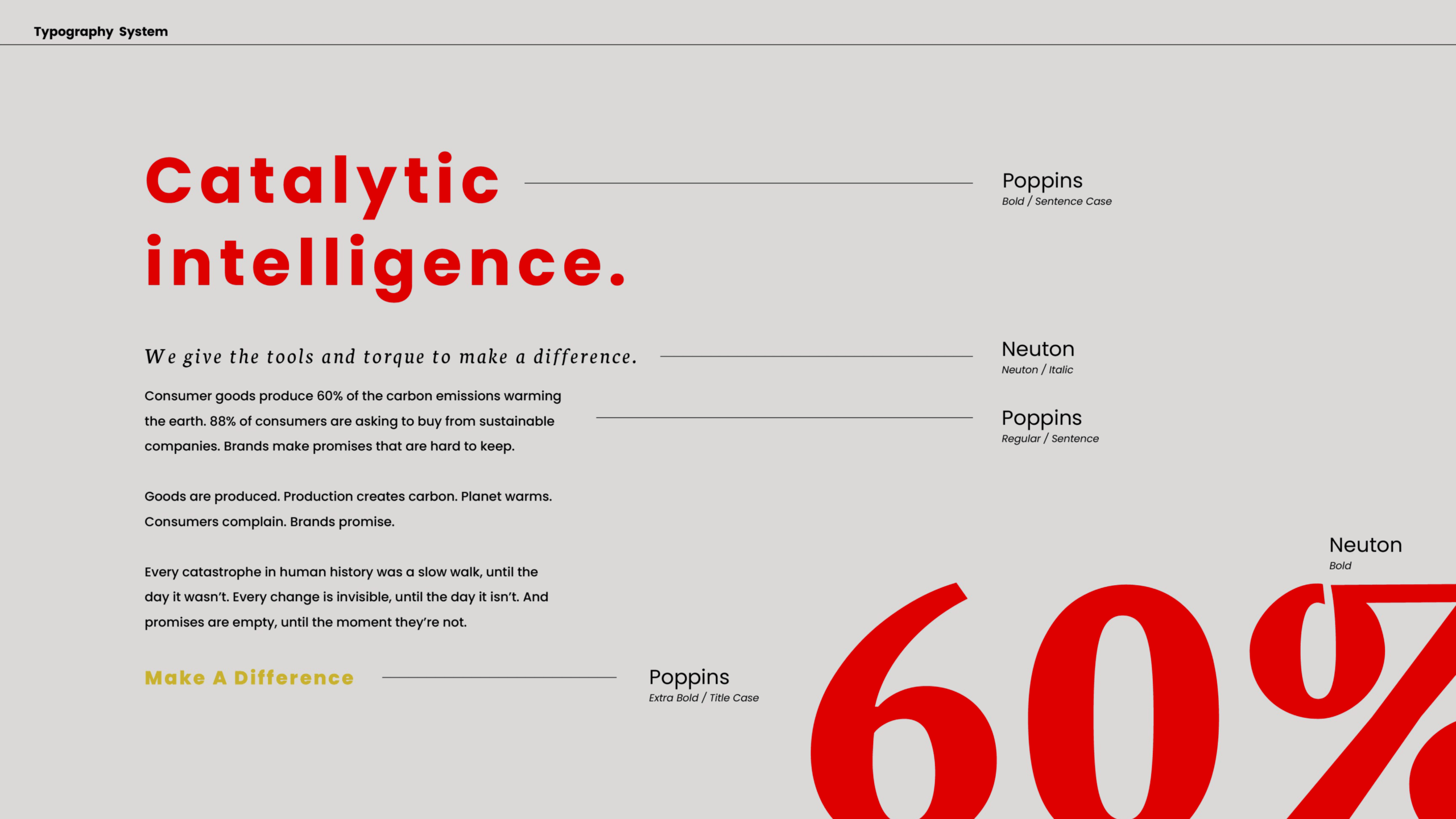
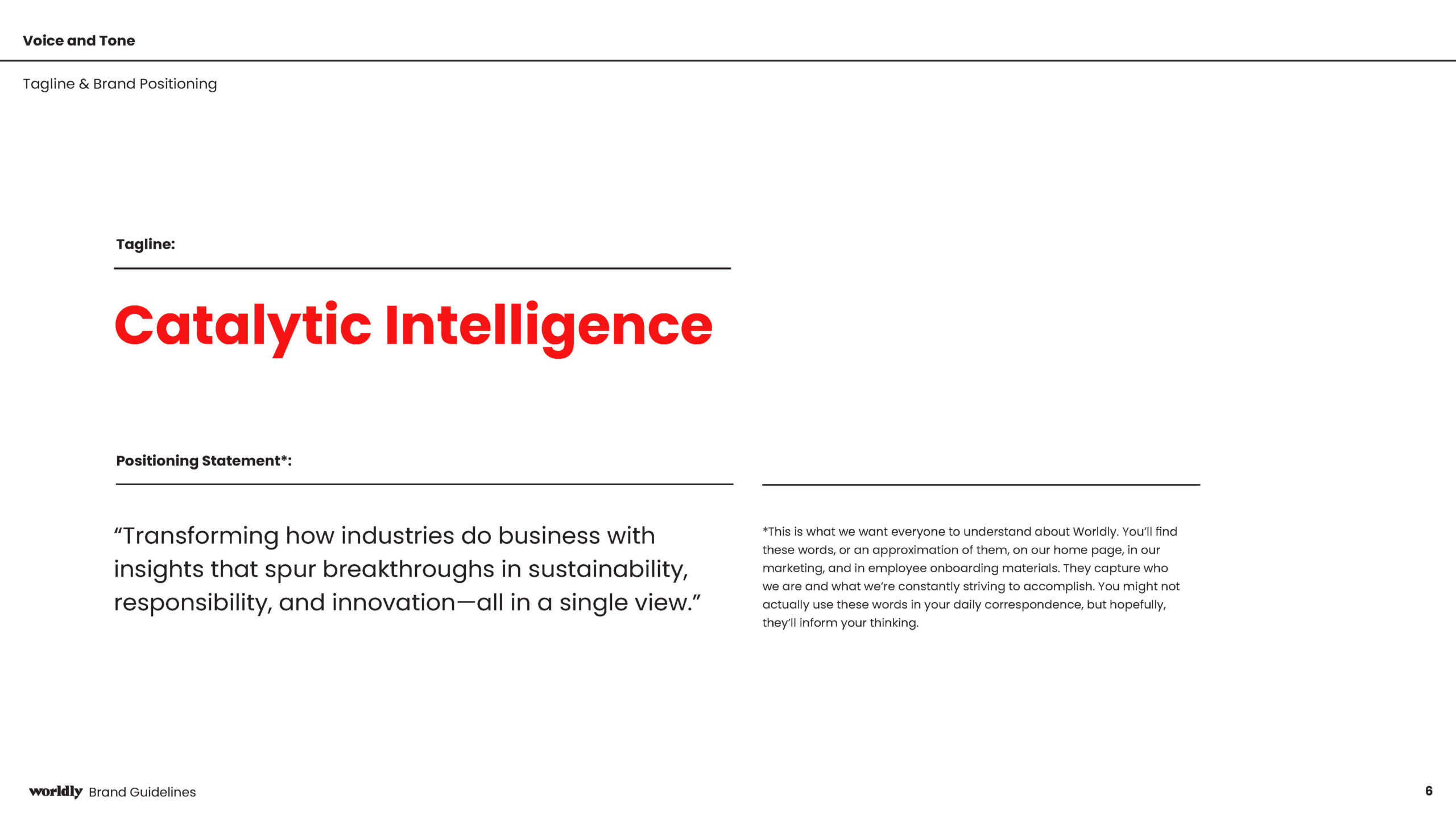
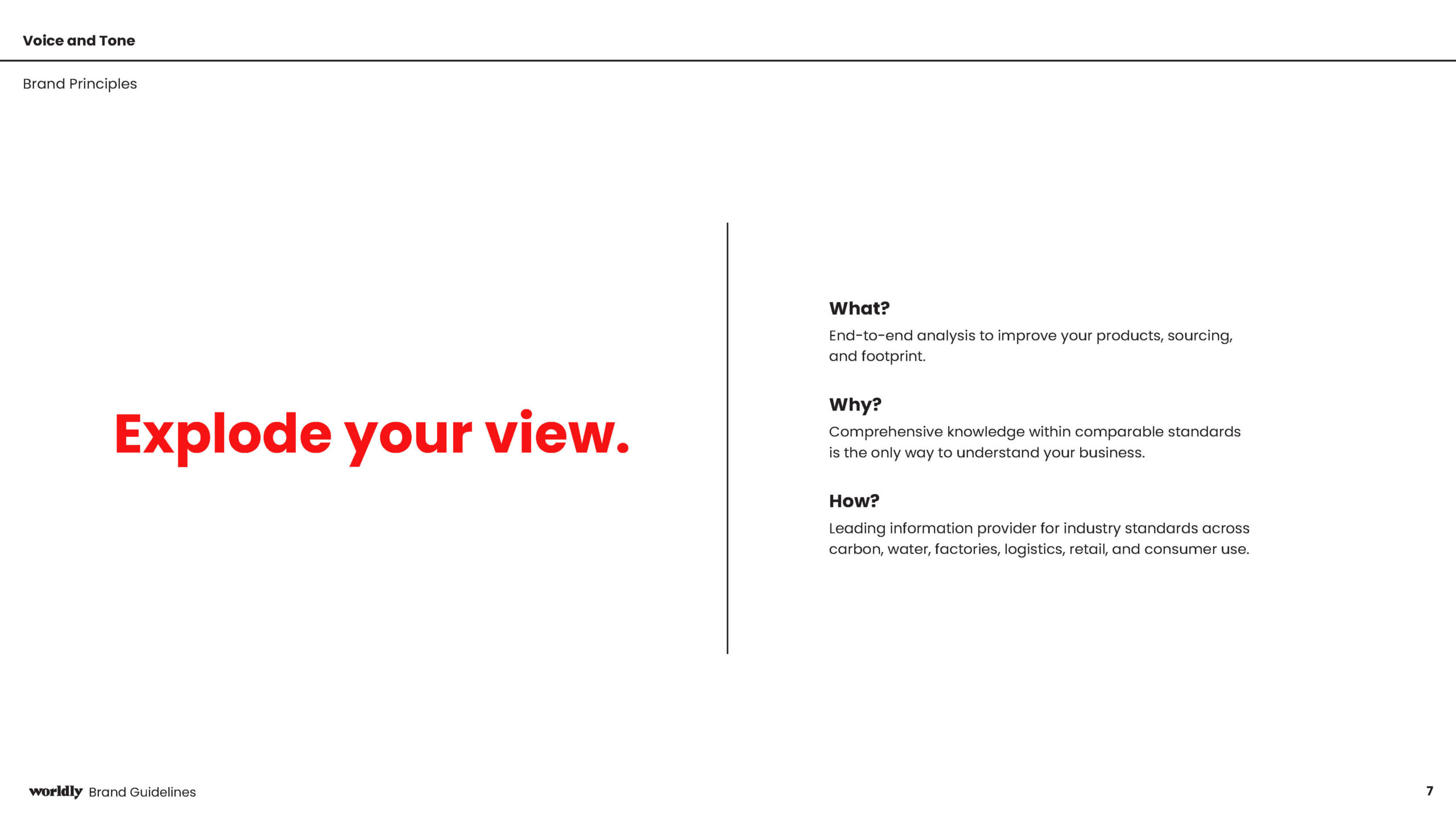
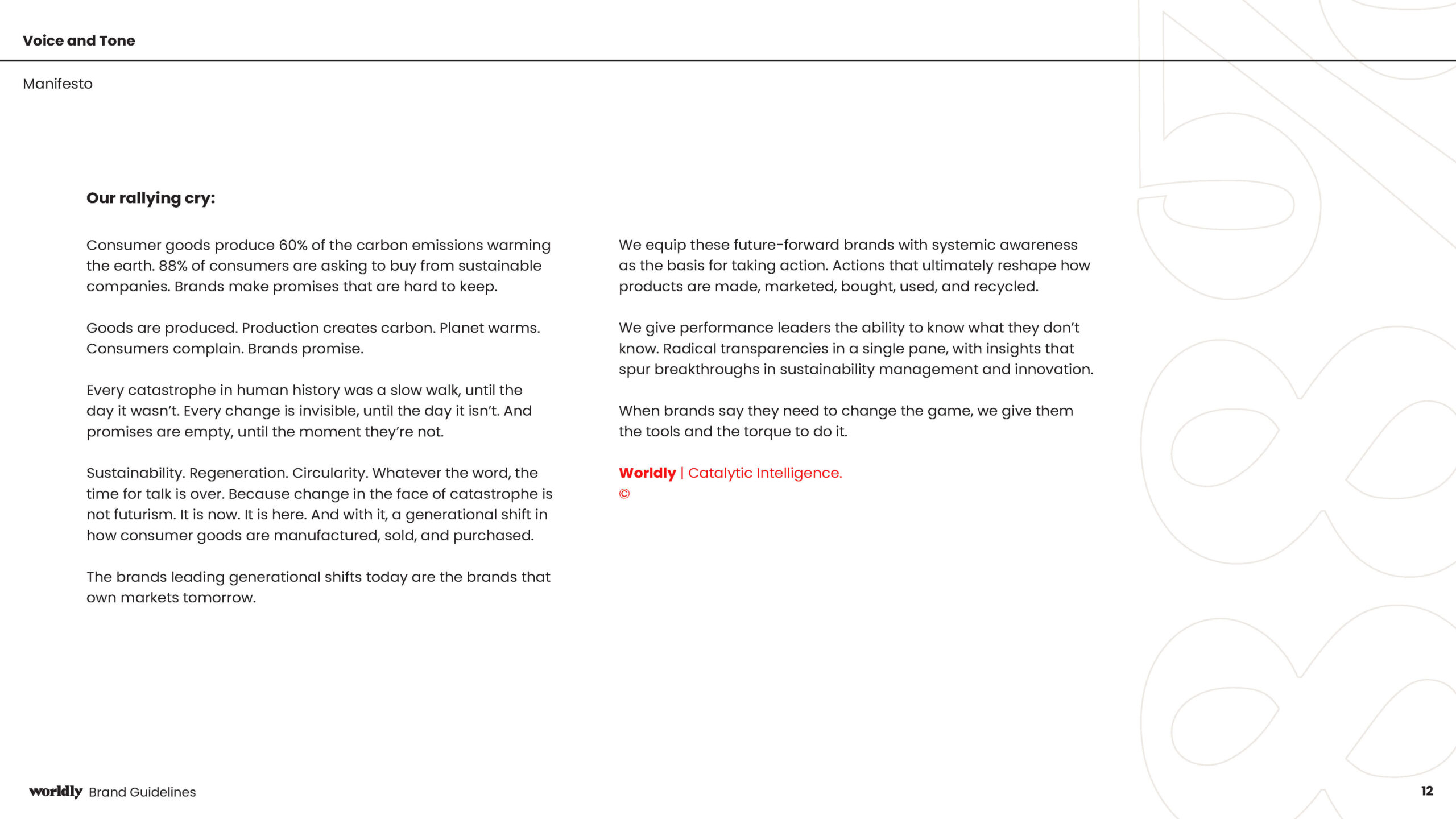
Our strategy centered on a new organizing principle: Catalytic Intelligence.
We defined Higg’s role as reshaping how companies operate through transformative technologies, insight-rich data, and systems thinking. This wasn’t sustainability scoring; it was fuel for decision-making.
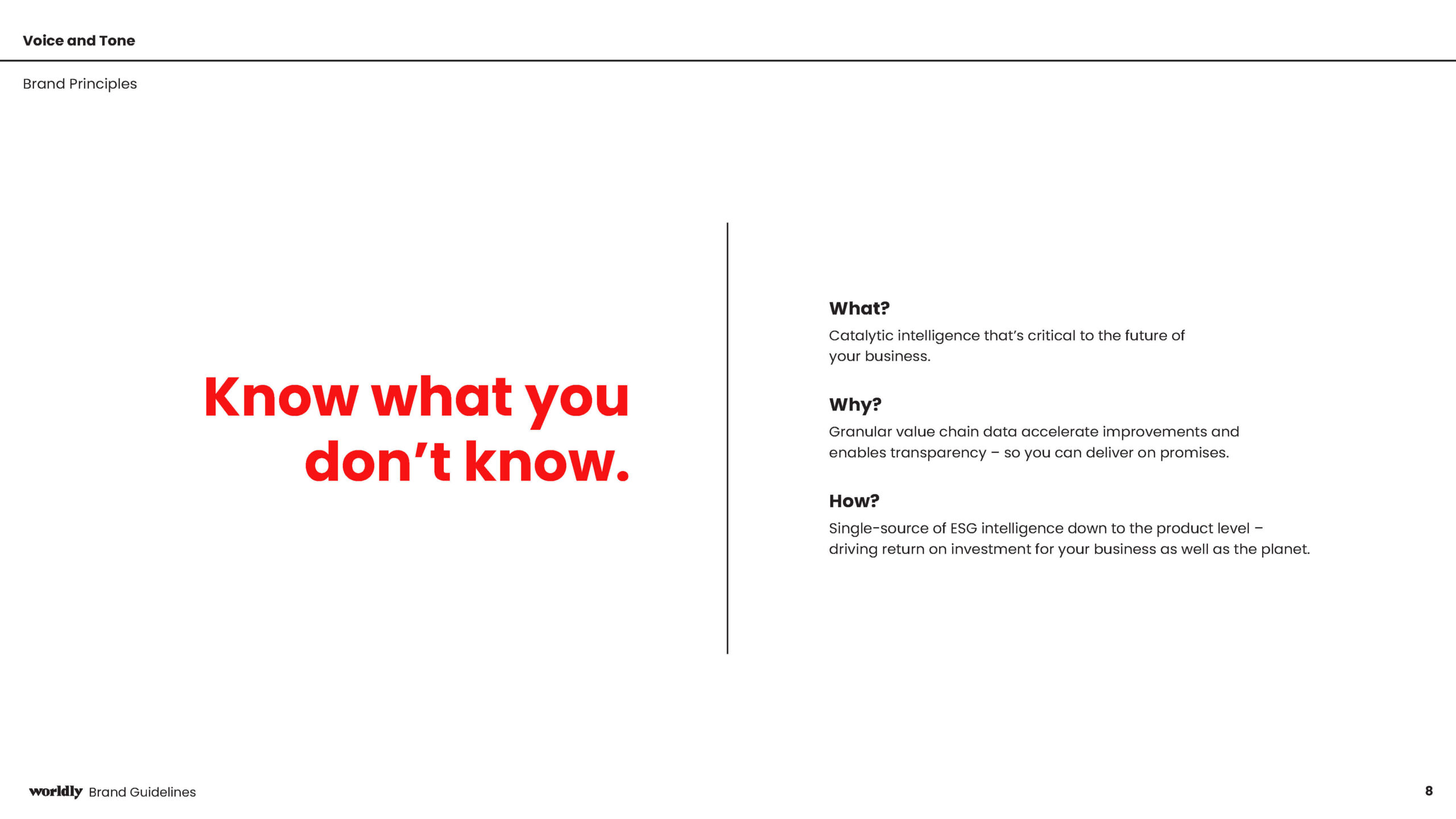
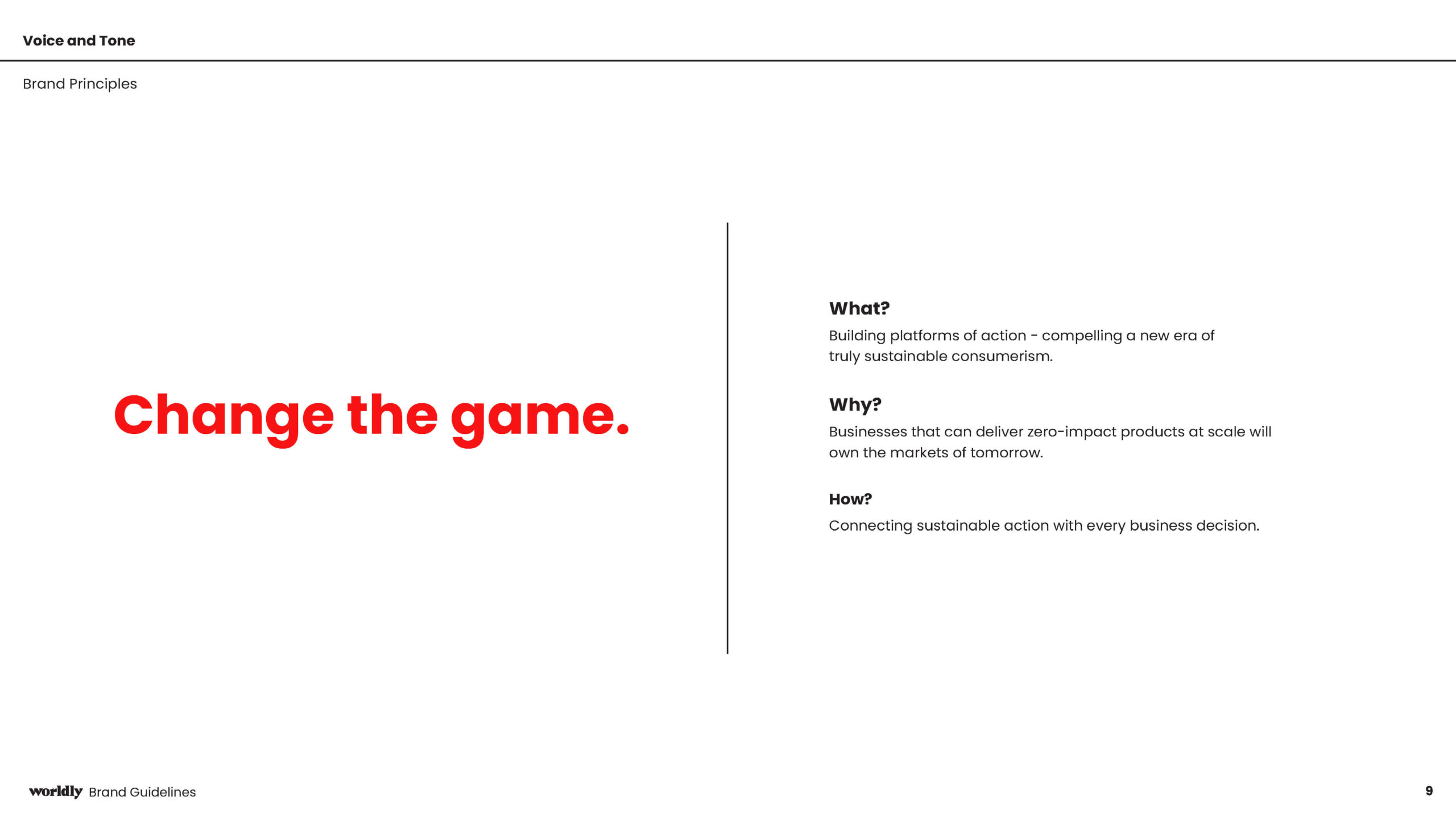
We created three narrative arcs:
- Explode Your View: Connect data to daily operations.
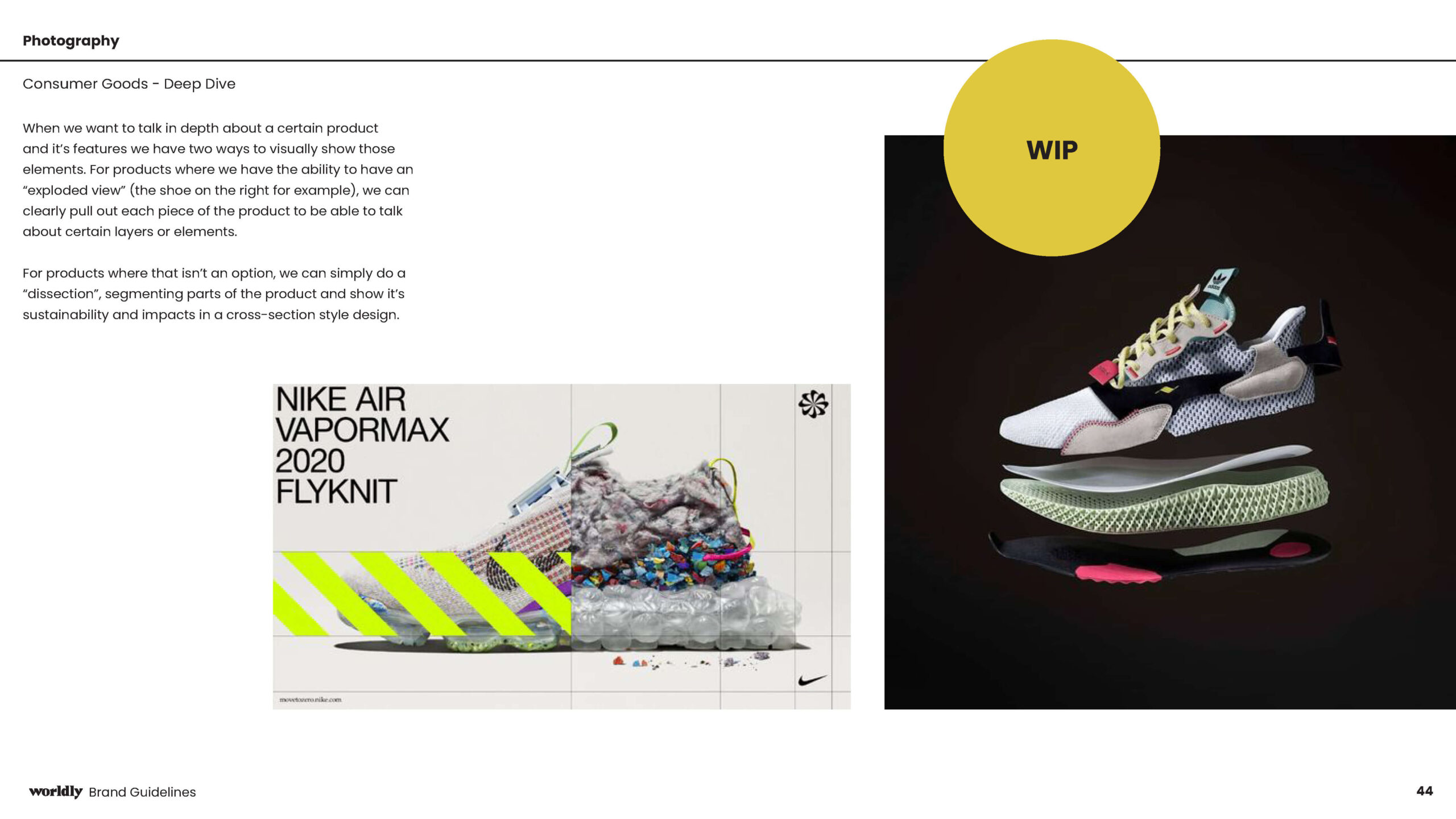
- Know Every Fiber: Understand the impact of every input.
- Change the Game: Redefine responsible business practices.
Refining the Voice and Messaging
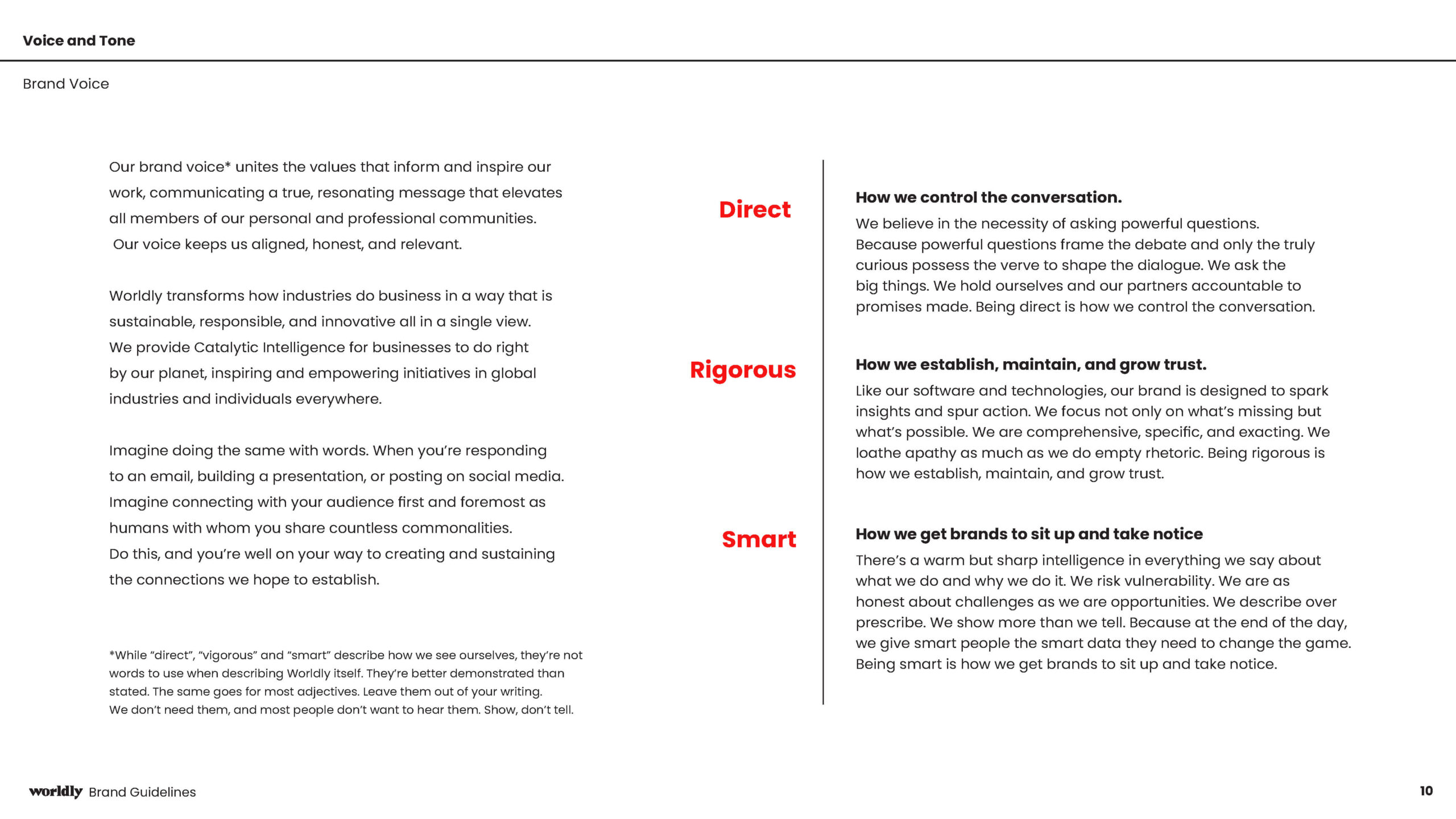
Higg’s new voice needed to be direct, rigorous, and transparent — bold without being boastful, intelligent without sacrificing clarity. We shaped messaging around three primary psychographic profiles:
- Pragmatists: Seek tools that simply get the job done.
- Idealists: Want to act in alignment with their values.
- Intellectuals: Aim to shape the conversation.
This framework ensured the brand could scale across industries while maintaining coherence and purpose.
Creative Output: Worldly — A New Name and Identity
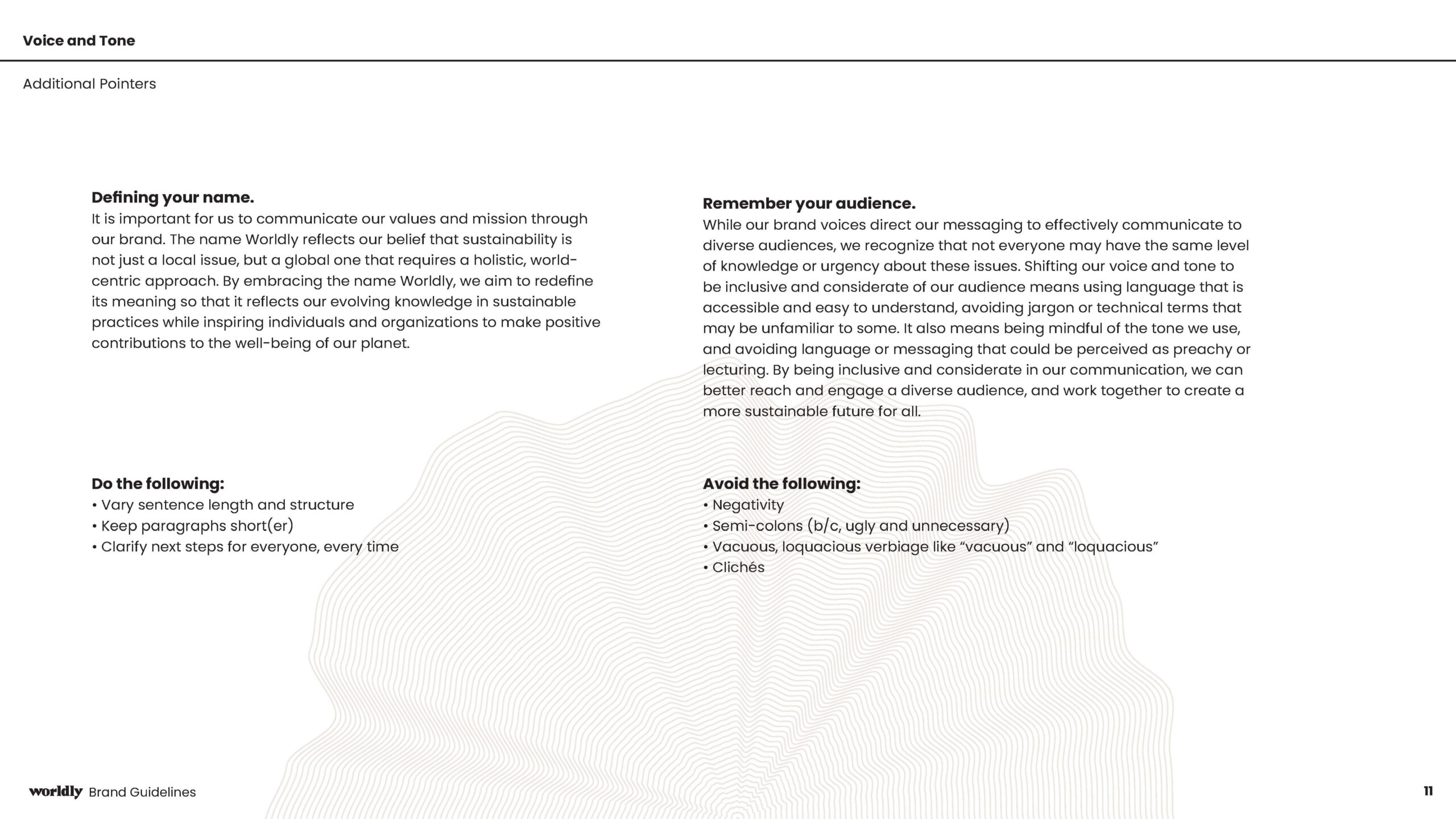
Naming was the final turning point. Working with a naming firm helped connect the platform’s expanding role to a name that could carry global ambition. “Higg” was synonymous with sustainability metrics, but it didn’t convey the platform’s expanding vision. Through our exploration, we landed on Worldly.
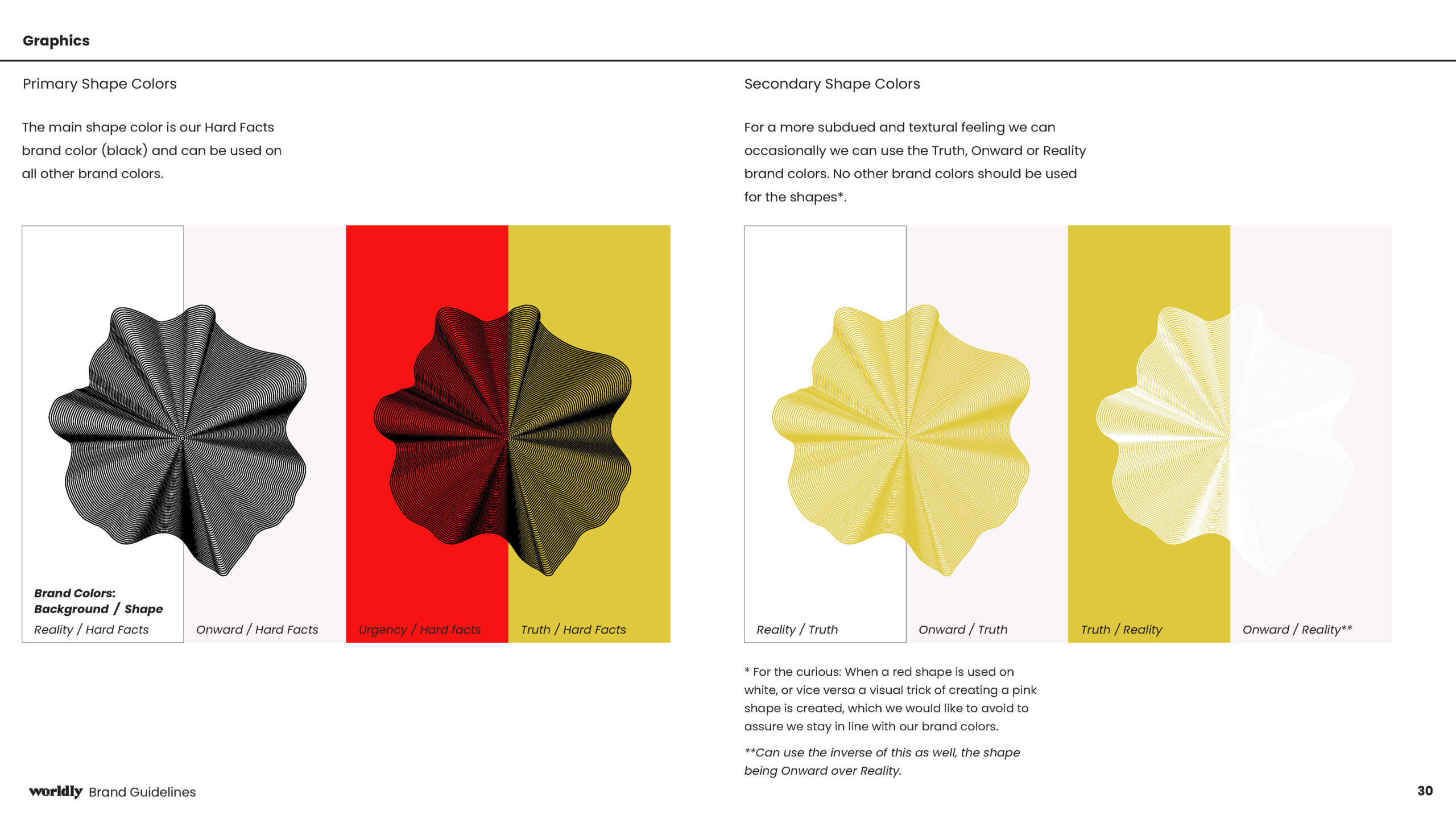
Worldly is human, global, and grounded in aspiration. It signals a shift in mission: to provide the intelligence companies need to make more responsible decisions.
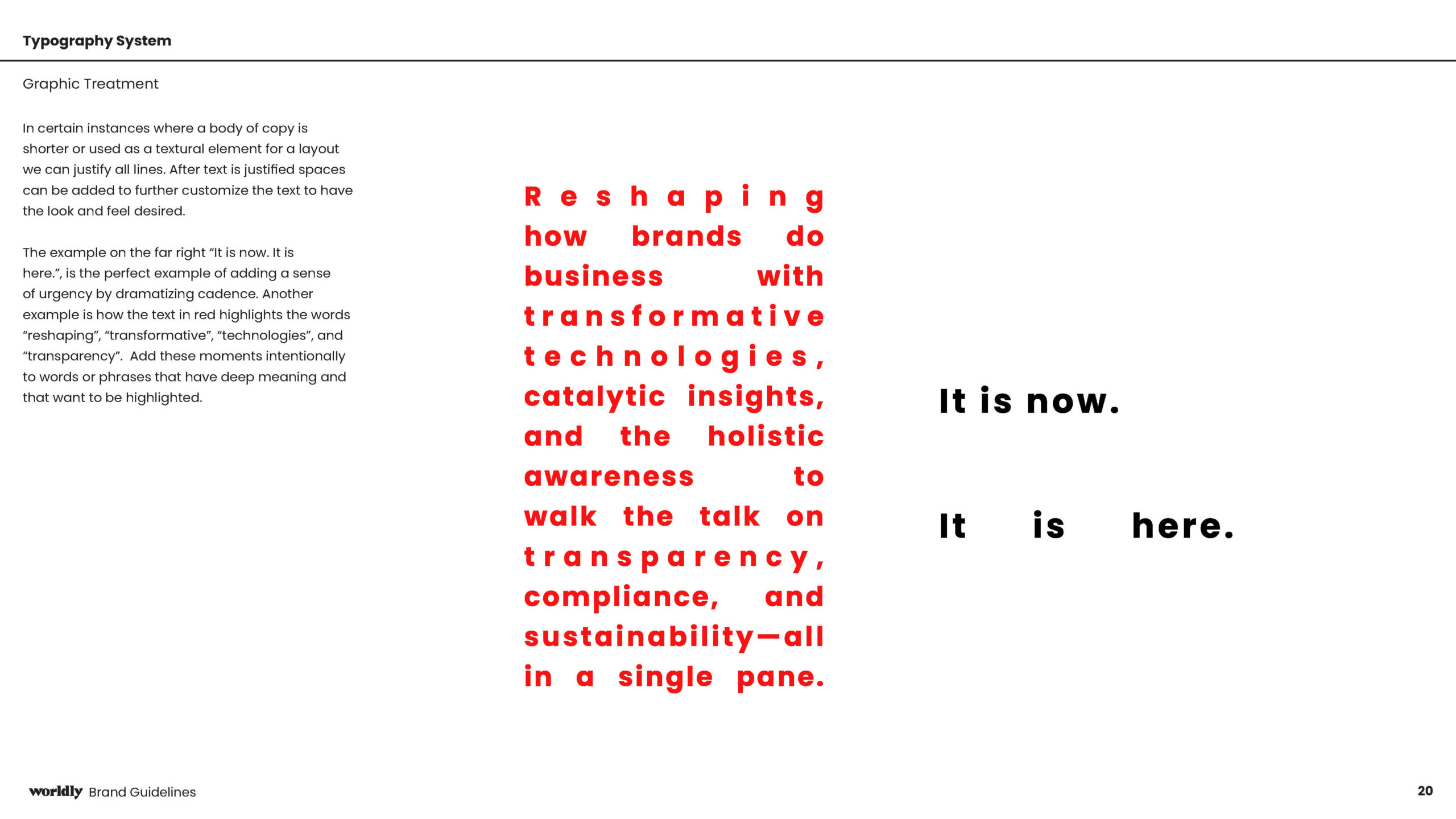
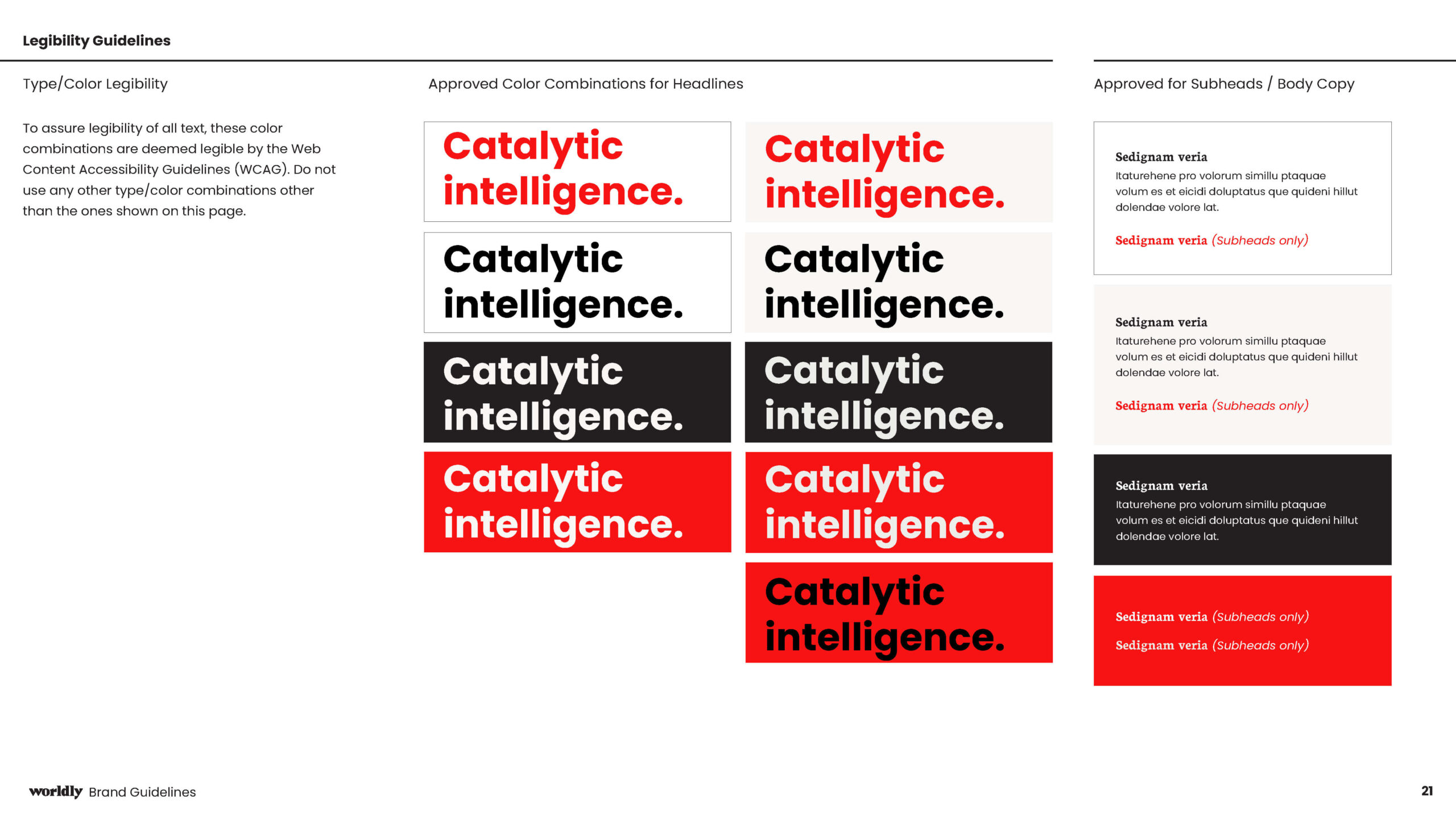
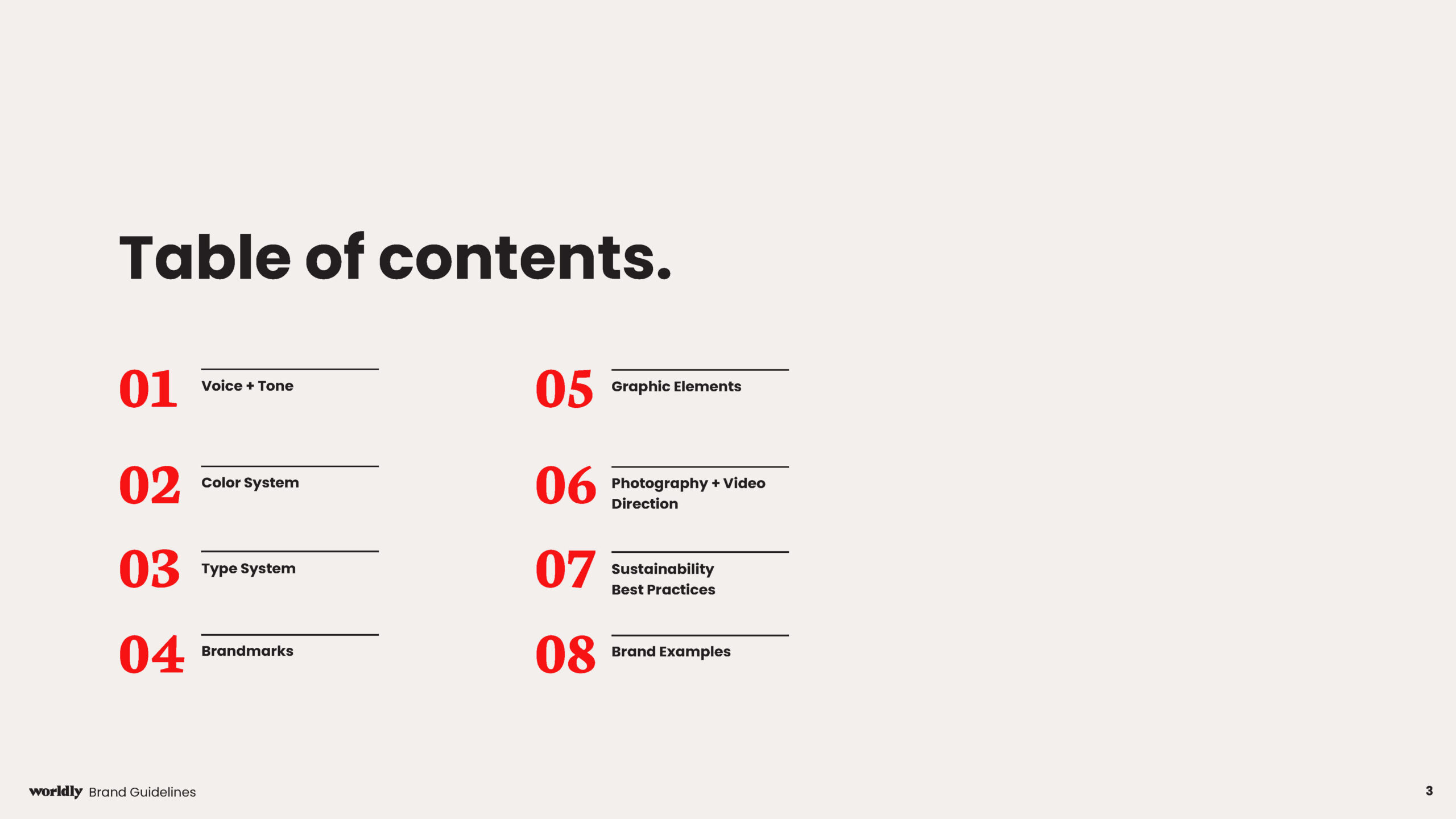
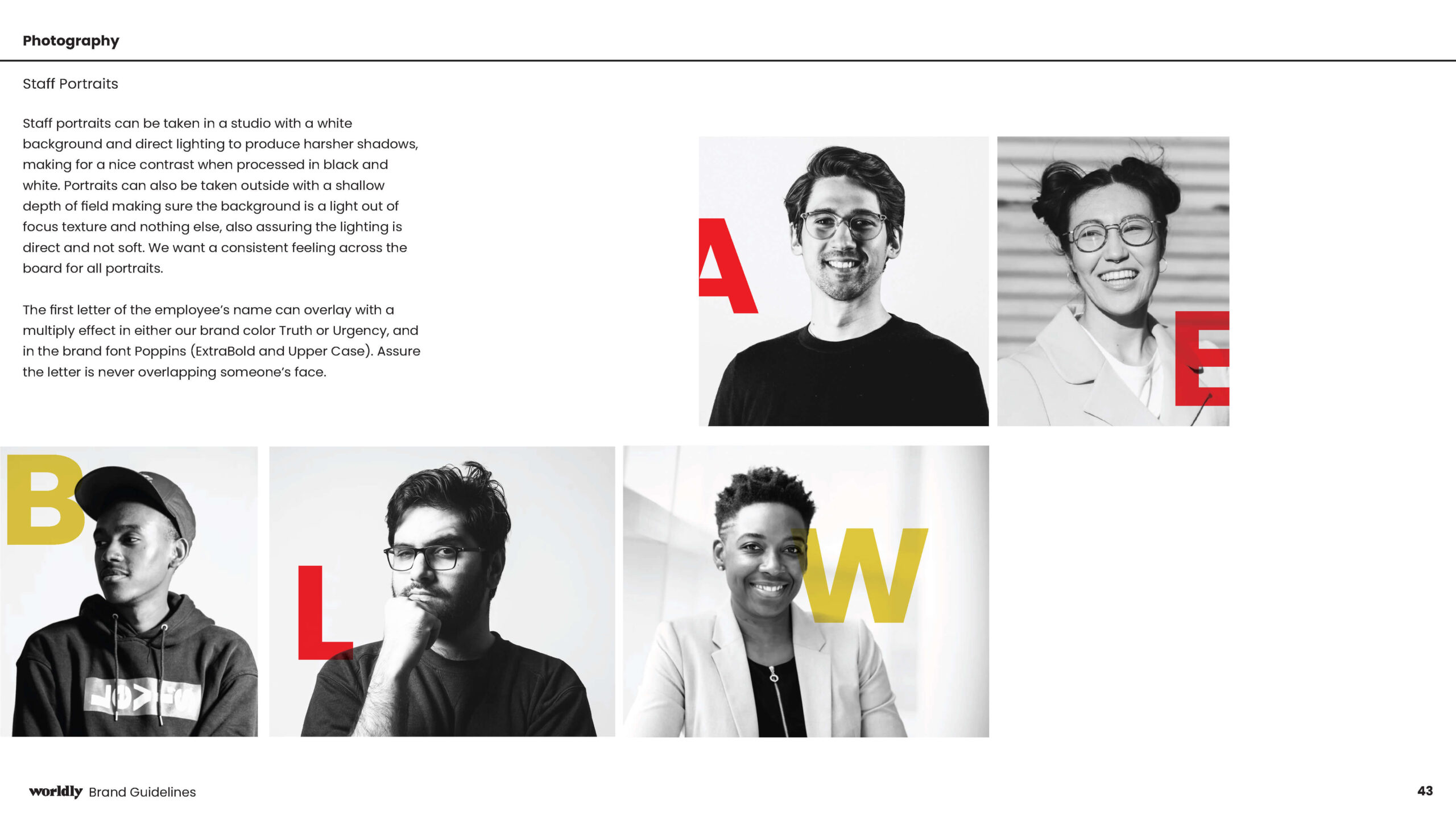
We built a comprehensive identity system that included:
- visual design direction
- messaging architecture
- launch strategy
- web and product content
Worldly quickly became a platform capable of supporting global ambition with clarity and credibility.
Media Momentum: The Worldly Rebrand That Rewrote the Sustainability Playbook
The impact of the rebrand was immediate and far-reaching. Within months of launch, Worldly appeared across top-tier publications as a definitive source of sustainability intelligence. McKinsey integrated the Higg Index into its ESG and supply-chain analytics. CNN and The Guardian cited Worldly in coverage on climate policy and ethical fashion.
Forbes profiled the platform as a case study on sustainability as business value. Harvard Business Review included it in discussions on regenerative enterprise models. WWD and Vogue Business recognized Worldly as a transparency tool shaping the next era of global fashion.
The consistency of coverage — academic, editorial, fashion, business — demonstrated something critical: the rebrand didn’t just reposition a company; it reframed the conversation.
Outcome: From Tool to Movement
Watson helped Higg transition from a backend utility to a front-facing force. We didn’t simply refine the brand; we unlocked its voice, clarified its ambition, and built a system capable of scaling its influence.
Worldly is now more than a platform. It is a meeting point — where procurement teams meet policymakers, where ESG goals meet daily operations, where brands, regulators, and consumers share a common language of impact.
Today, Worldly continues to set the bar for what sustainability standards can become when they are not only intelligent, but human. The brand is proving that rigorous data, when combined with clear storytelling and global reach, can catalyze an entire industry — and maybe even help redefine what progress looks like in the 21st century.
HIGG Index Users
- Adidas
- Nike, Inc.
- Levi Strauss & Co.
- Gap Inc.
- H&M Group
- PUMA SE
- Lululemon Athletica
- VF Corporation (owner of brands like The North Face and Timberland)
- C&A
- Kering (owner of brands like Gucci, Saint Laurent, and Alexander McQueen)
- Target Corporation
- Inditex (owner of brands like Zara and Massimo Dutti)
- Patagonia
- REI (Recreational Equipment, Inc.)
- PVH Corp. (owner of brands like Tommy Hilfiger and Calvin Klein)
- Marks & Spencer
- Arc’teryx
- Burberry
- Under Armour
- Columbia Sportswear
- Esprit
- Nordstrom
- Decathlon
- ASICS