


All Mouth, No Trousers: Design, Communication, and the Crisis of Authenticity

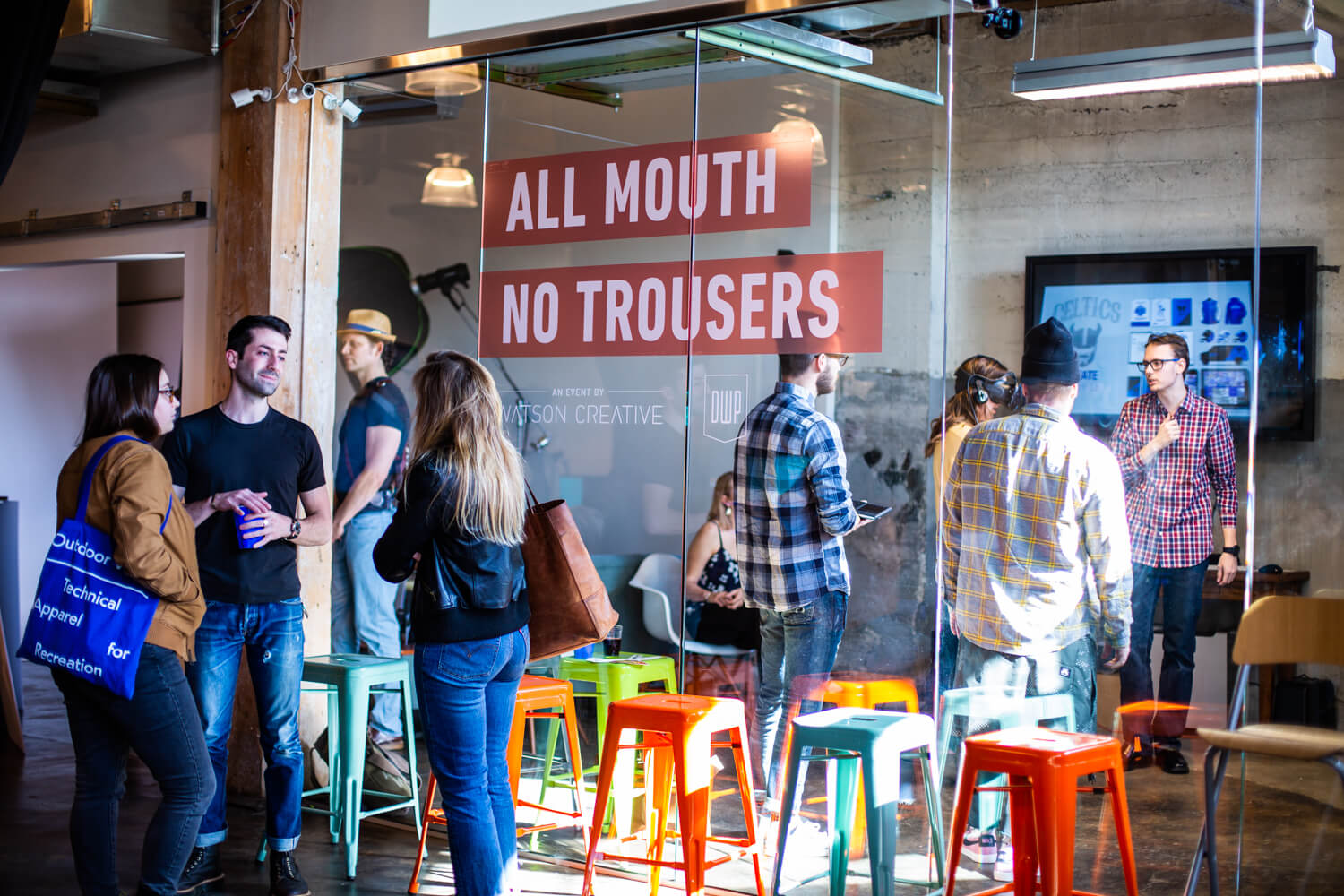
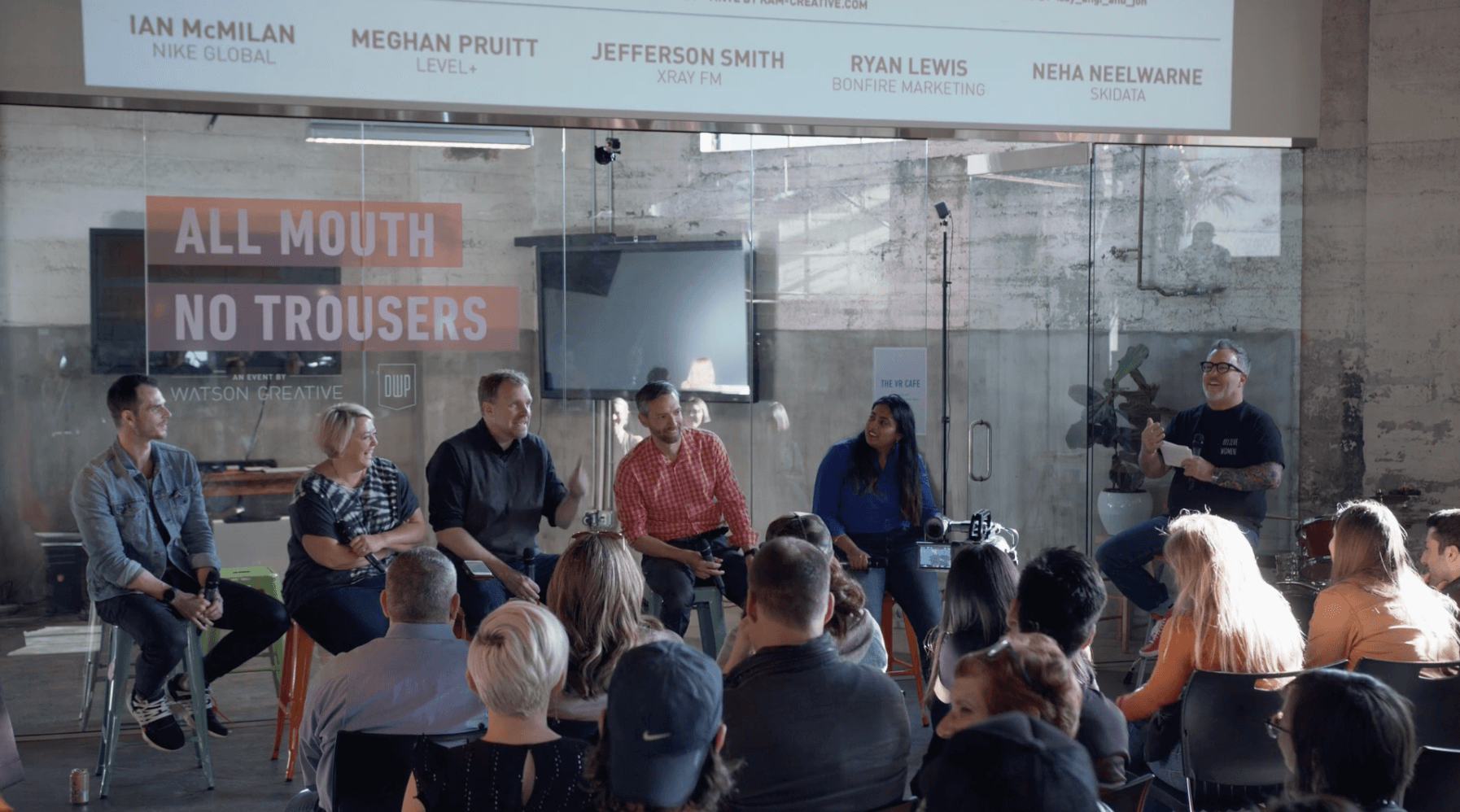
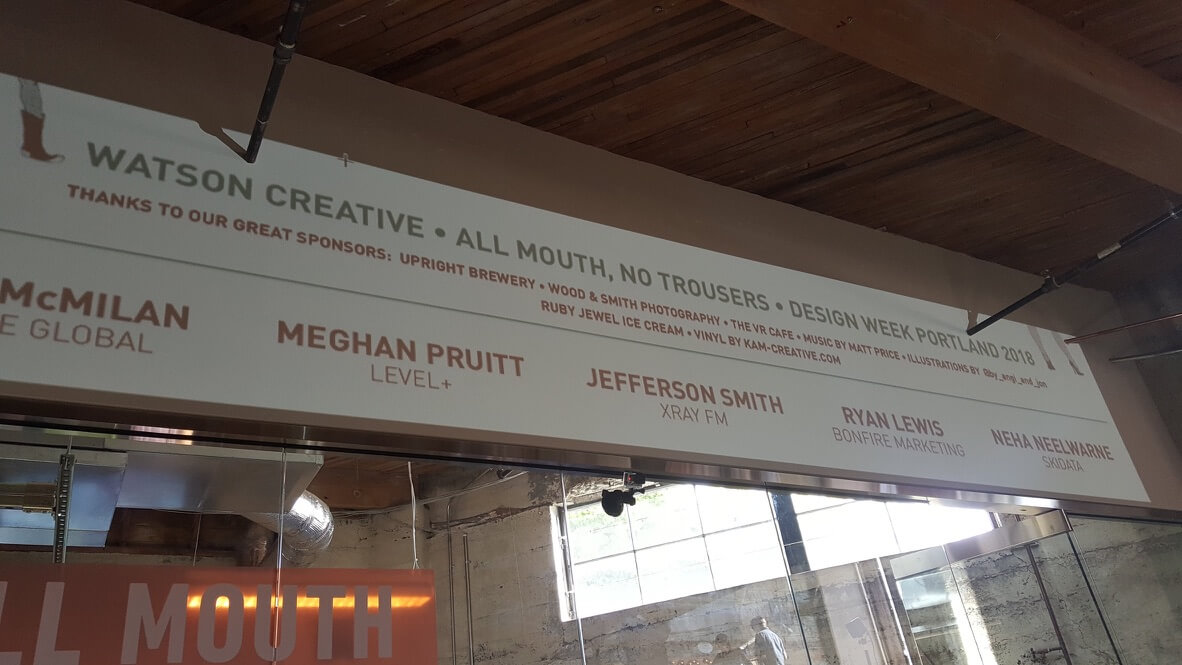
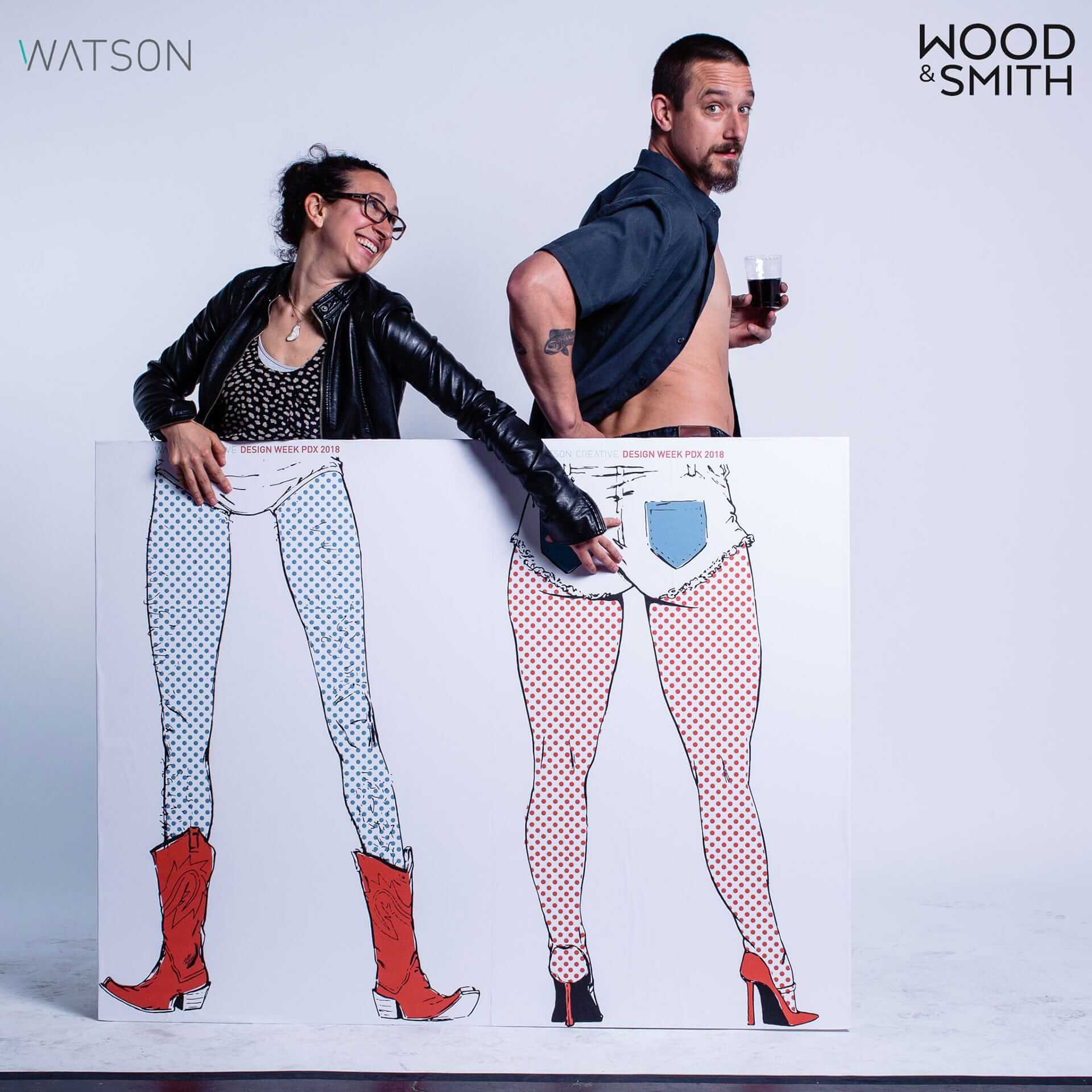
In an era where audiences are increasingly alert to the gap between what brands say and what they do, All Mouth, No Trousers struck a nerve. Hosted at Watson’s Portland studio during Design Week Portland, the event convened strategists, creatives, and cultural leaders to confront a shared problem: credibility.
The title borrows from a British phrase used to describe people or organizations that talk big but fail to follow through. It proved fitting. Across branding, politics, design, and social impact work, the cost of empty language has never been higher. Audiences are paying attention. And they are no longer patient with performative gestures.
The evening was less about aesthetics and more about alignment. Not how things look, but whether they hold up under scrutiny.
Why We Talk About Talk
Communication is the currency of every brand. But communication without credibility is just noise.
The panel explored how design functions beyond visuals. Design is the connective tissue between words, actions, and outcomes. When those elements are misaligned, trust erodes quickly. Empathy, transparency, and consistency are no longer aspirational traits. They are competitive advantages.
In a landscape shaped by greenwashing, performative values, and political spin, skepticism is rational. According to the Edelman Trust Barometer, a majority of consumers say shared values influence their purchasing decisions, yet far fewer believe brands actually live up to those claims.
The implication is clear. Saying the right thing is no longer enough.
From Demographics to Belief Systems
One recurring theme was the shift from demographic targeting to belief-based communication. As Ryan Lewis of Bonfire Marketing noted, brands are no longer speaking to age brackets or income levels. They are speaking to value systems.
That shift demands nuance. It requires brands to show their humanity, acknowledge imperfection, and invite audiences into an ongoing relationship rather than a polished narrative. Authenticity is not about certainty. It is about coherence.
Ian McMillan of Nike reinforced this point, emphasizing that purpose-driven messaging only matters if it is supported by action. Inclusion, innovation, and equity cannot live solely in campaigns. They must be reflected internally, operationally, and consistently.




















From the Studio to the Streets
Watson’s own work provided tangible examples of these principles in practice. In rebranding the Autism Society of America, the process did not begin with visuals. It began with listening. More than 150 stakeholders, families, clinicians, and self-advocates were engaged to ensure the brand system reflected lived experience rather than marketing theory.
Similarly, work with the Oregon Cultural Trust required building trust in a space where skepticism toward institutions runs high. The solution was not louder messaging, but local relevance and shared ownership. Design that speaks with communities rather than at them creates durability.
The Political Layer of Design
To ignore politics is to misunderstand culture.
Design is inherently political, whether acknowledged or not. Choices about language, accessibility, representation, and priority all signal values. In moments of social tension, neutrality often functions as avoidance.
As Matt Watson noted during the event, the role of design is not to sell people on what they do not need, but to elevate what matters. That requires showing up fully, with clarity and accountability.
Authenticity Is Not Anti-Performance
Values-driven work is not at odds with results. Data increasingly supports what many practitioners already know: trust builds retention. Consistency builds advocacy.
Brands that align stated purpose with actual behavior outperform those that rely on surface-level positioning. Authenticity compounds over time, strengthening relationships and long-term value.
Work with organizations like Craft3, a community lender serving historically underserved entrepreneurs, illustrates this reality. When communication systems reflect respect rather than condescension, equity and growth reinforce each other.
Walking the Talk
All Mouth, No Trousers was not positioned as a one-day conversation. It was framed as a principle.
As the industry navigates AI disruption, climate urgency, and cultural polarization, the demand for honesty has only intensified. Designers and strategists are being asked to take responsibility not just for how things look, but for what they enable.
The standard is no longer cleverness.
It is coherence.
Before launching the next campaign, the question is simple: Are the values real?
Is the story true?
And are we willing to be held to it?
That is the bar.
Purposeful animation services can give an idea movement and personality without losing the clarity that makes it credible.